← More work

Project highlight

CB2 National Unlock Door Promotion

A national drive-to-store campaign for CB2, 2010–2011: orange doors on city streets, a key to unlock, and a chance to win in stores and online.
  • Campaign
  • Retail
  • Experience Design
  • Game
  • Interaction Strategy
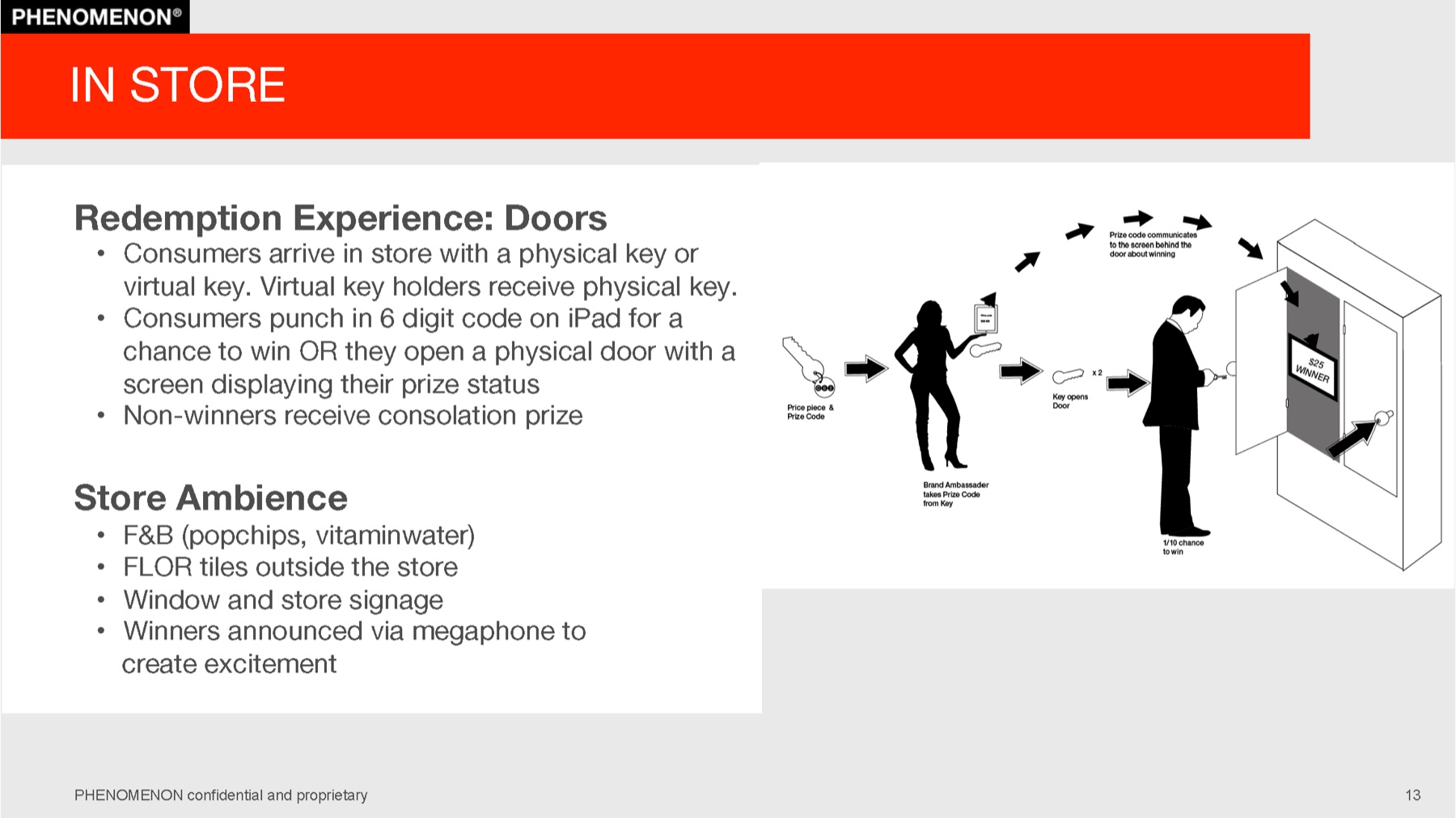
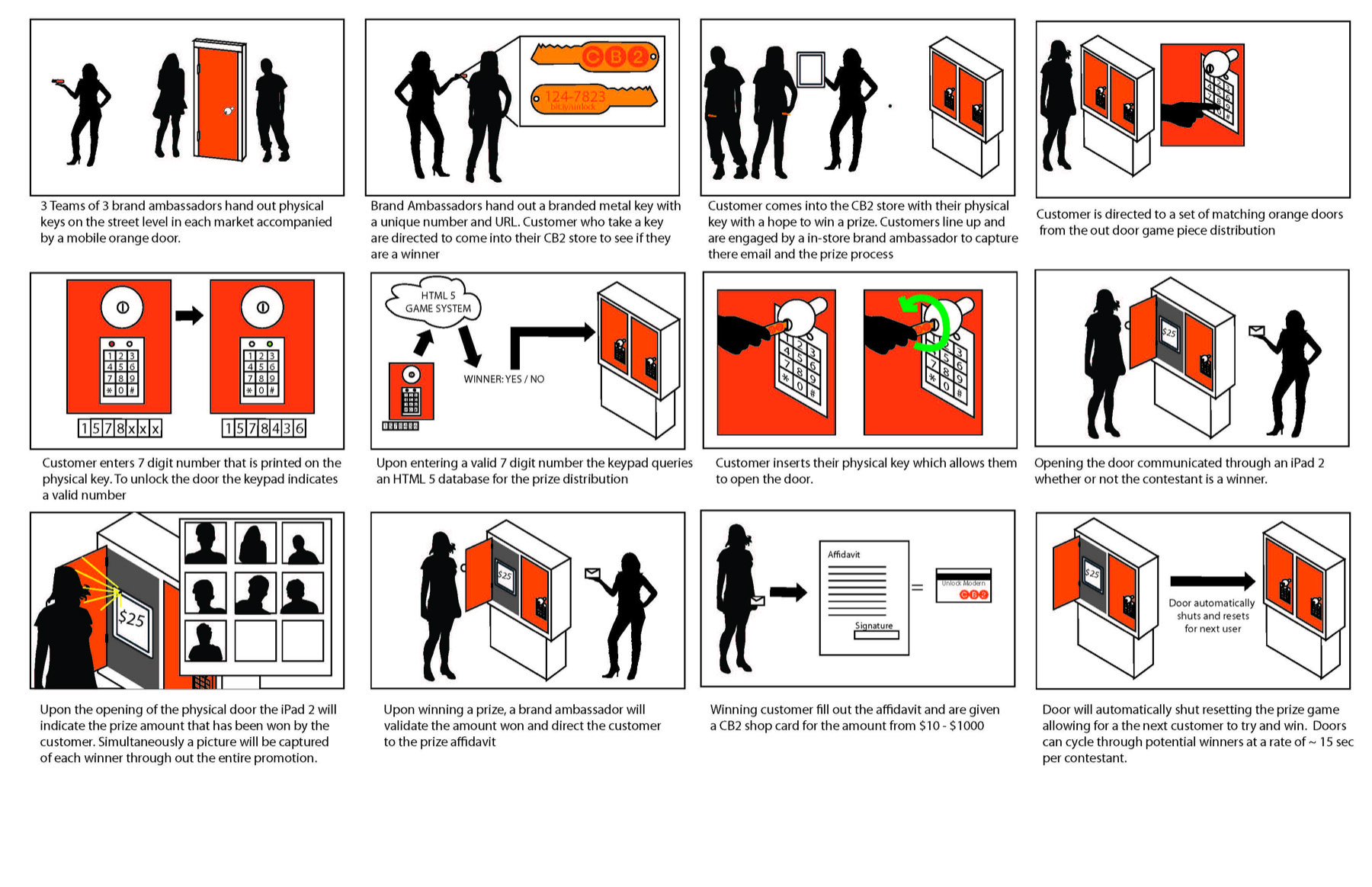
Storyboard of the in-store door game: how a customer uses a key at the door to see if they won
My role
UX Designer
Pitched the concept, then designed the game system
Client
CB2
National holiday promotion
Scope
11 locations nationally
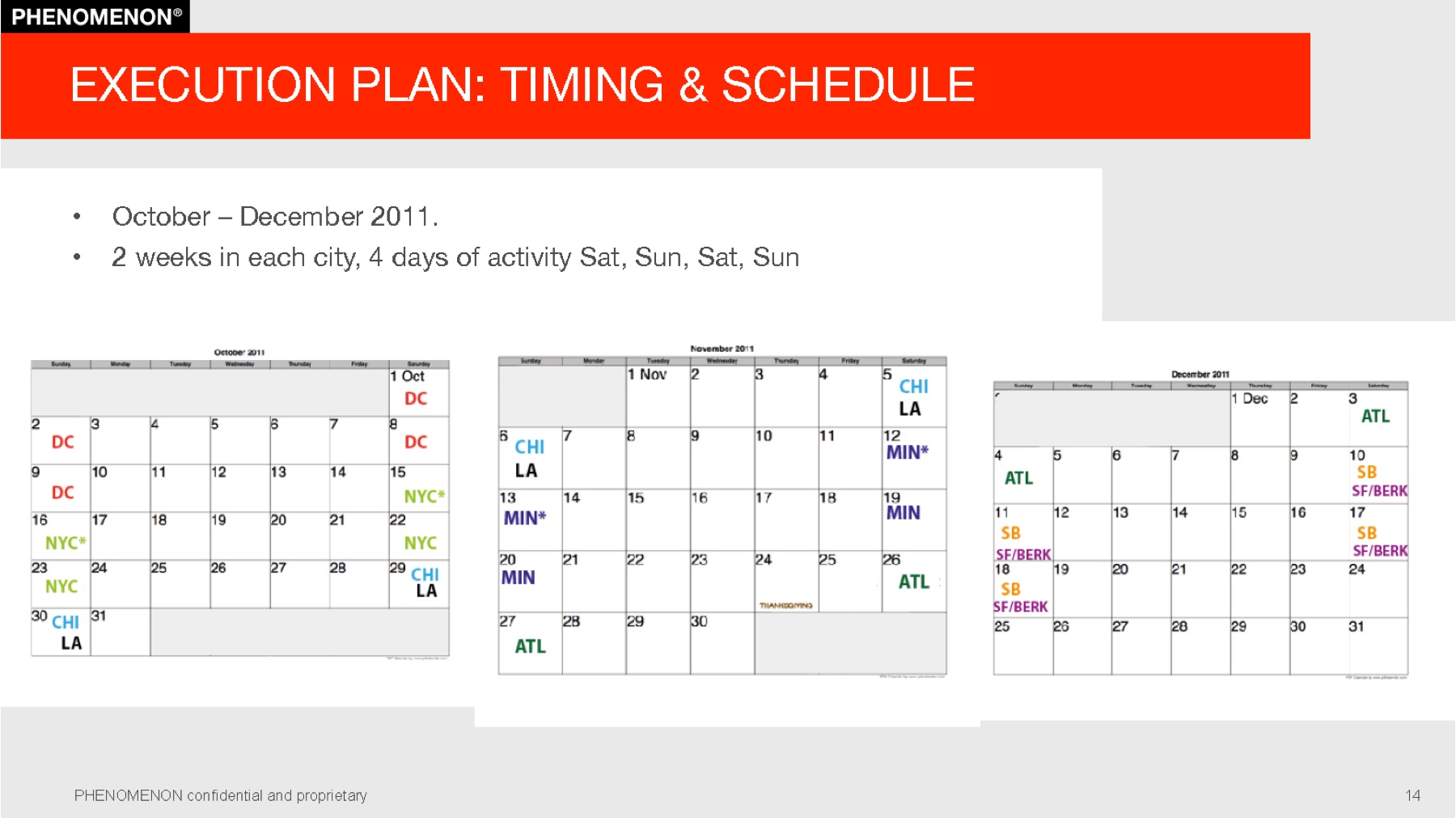
2 weekends, Oct–Dec 2011
When
2010–2011
Holiday promotion, Oct–Dec 2011

The quick version

CB2 wanted buzz, store traffic and a conversation with customers, nationally, as part of its holiday push. I pitched the concept, unlock affordable modern, and then executed it. Brand Ambassadors carried bright orange doors onto city streets and handed out keys. People took them to a microsite and into stores to see if their key won.

I architected and designed the whole game system: the keys, the microsite, and the in-store reward, an iPad with a keypad door. I also contracted a technologist friend for the build and drew the shop and mechanical drawings for manufacturing. The campaign ran across two weekends at 11 locations, from October to December 2011.

Results

  • 115,000+keys distributed across 11 locations
  • 2.5×foot traffic at every location
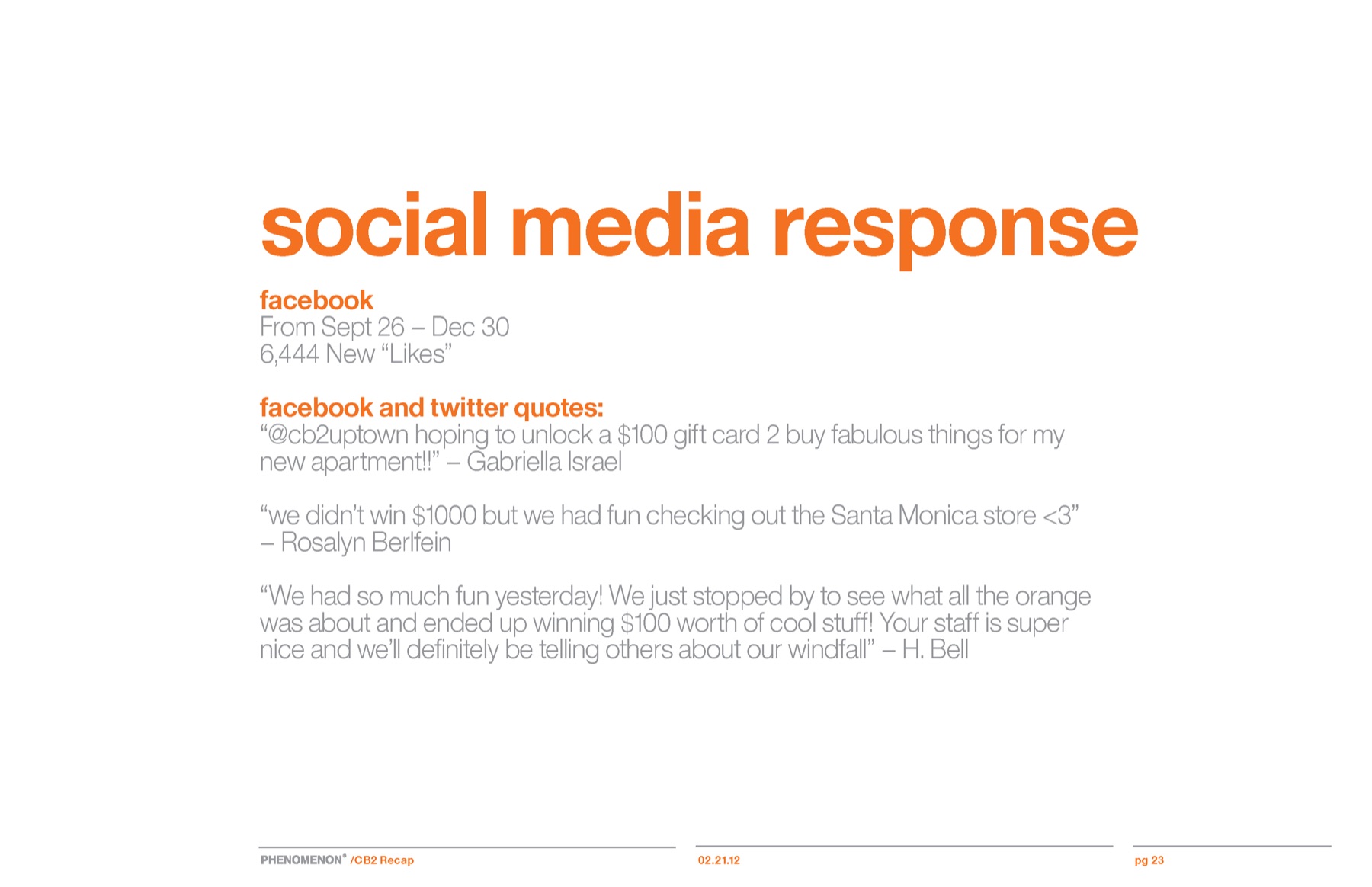
  • 6,444new social media likes
  • 100%of prizes distributed

The campaign film

CB2 Unlock Affordable Modern, a two-minute look at the campaign.

The plan

The project plan deck: goals, concept, and how the campaign worked on the street, online, in email and in store. Flip through all 17 slides.
  1. CB2 project plan slide 1: Title: CB2 National Promotion, Fall 2011.
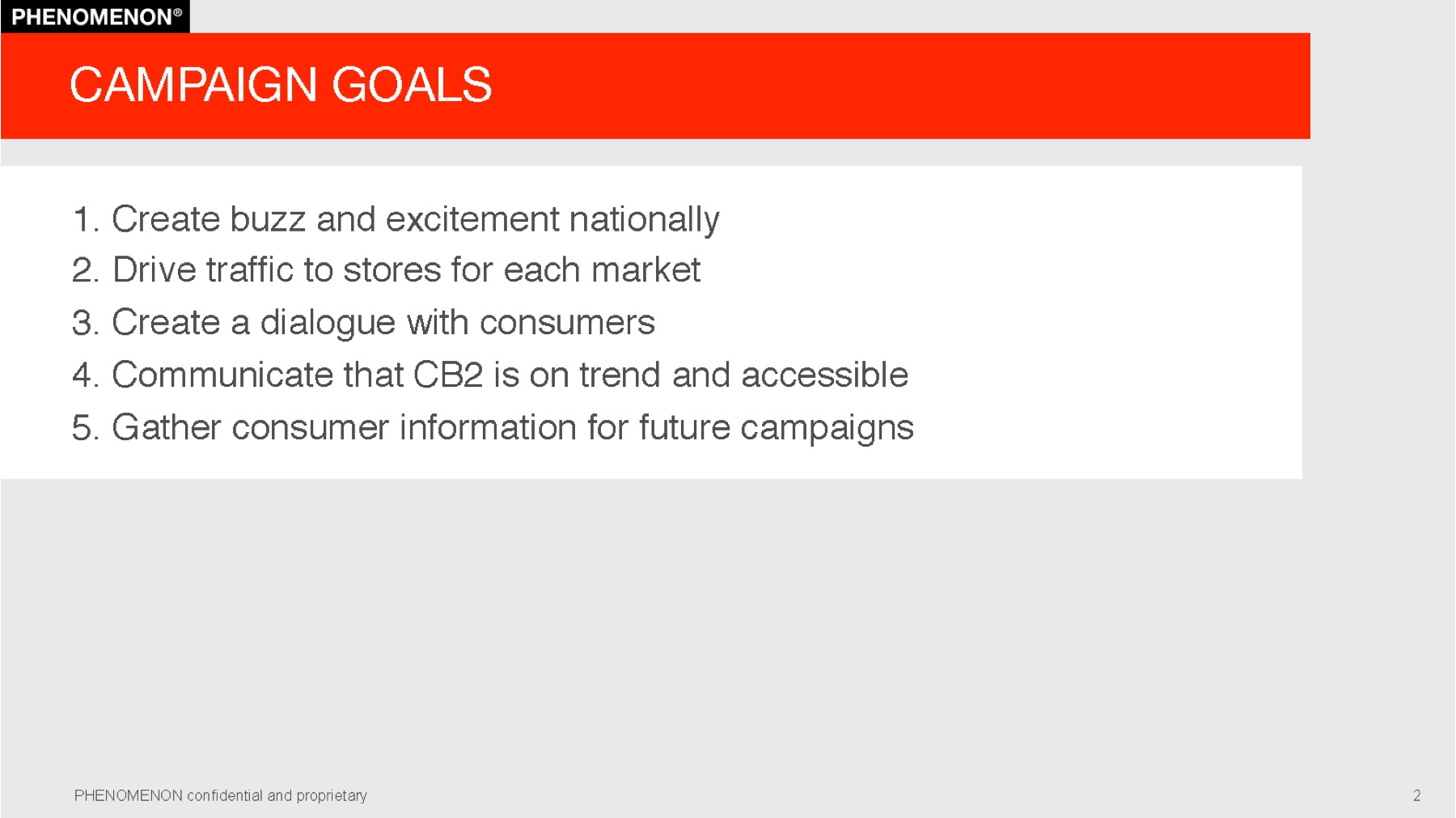
  2. CB2 project plan slide 2: Campaign goals: buzz, store traffic, dialogue, a clear message on trend and accessibility, and consumer information for the future.
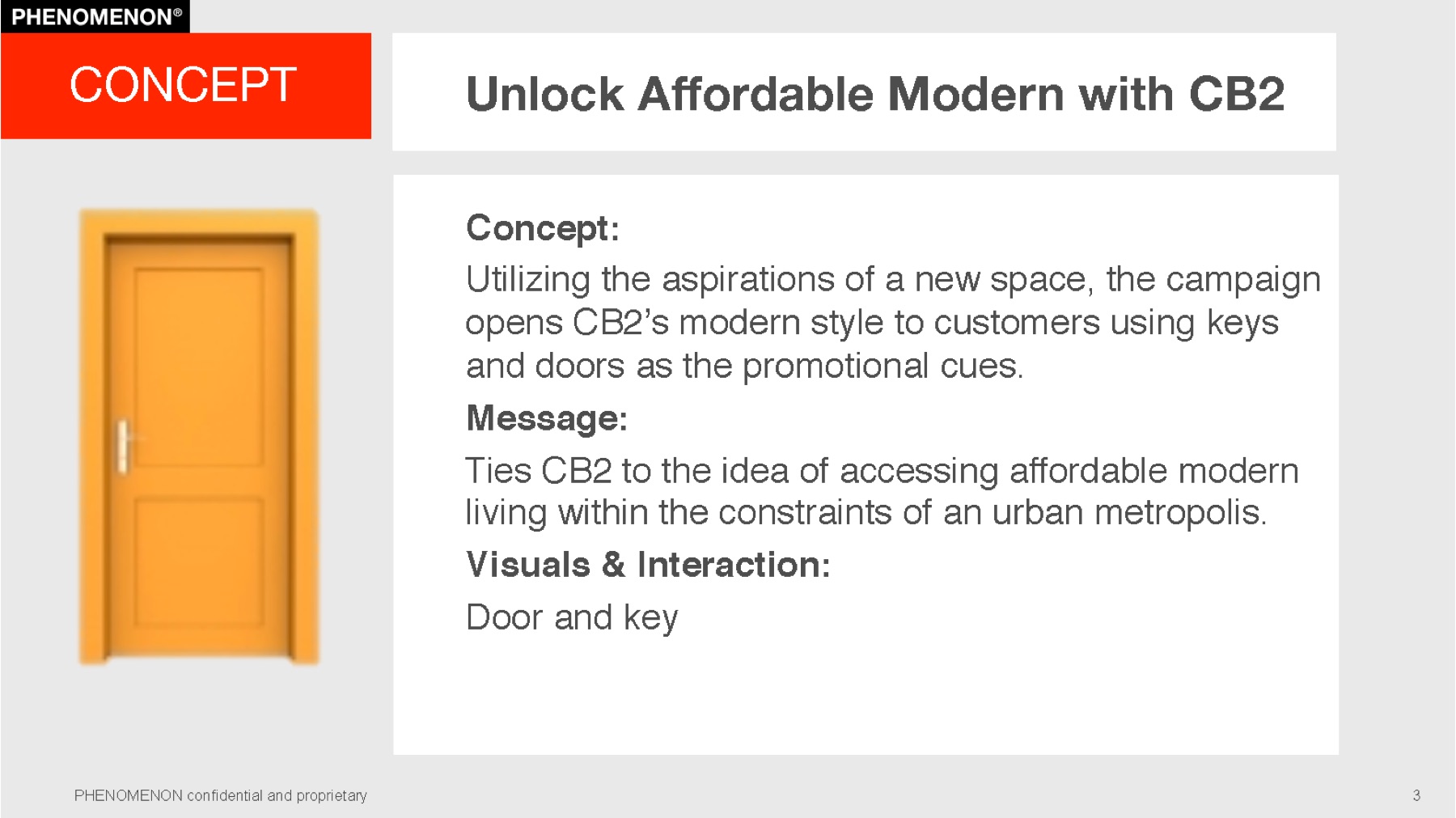
  3. CB2 project plan slide 3: The concept: Unlock Affordable Modern with CB2, with a door and key as the visual idea.
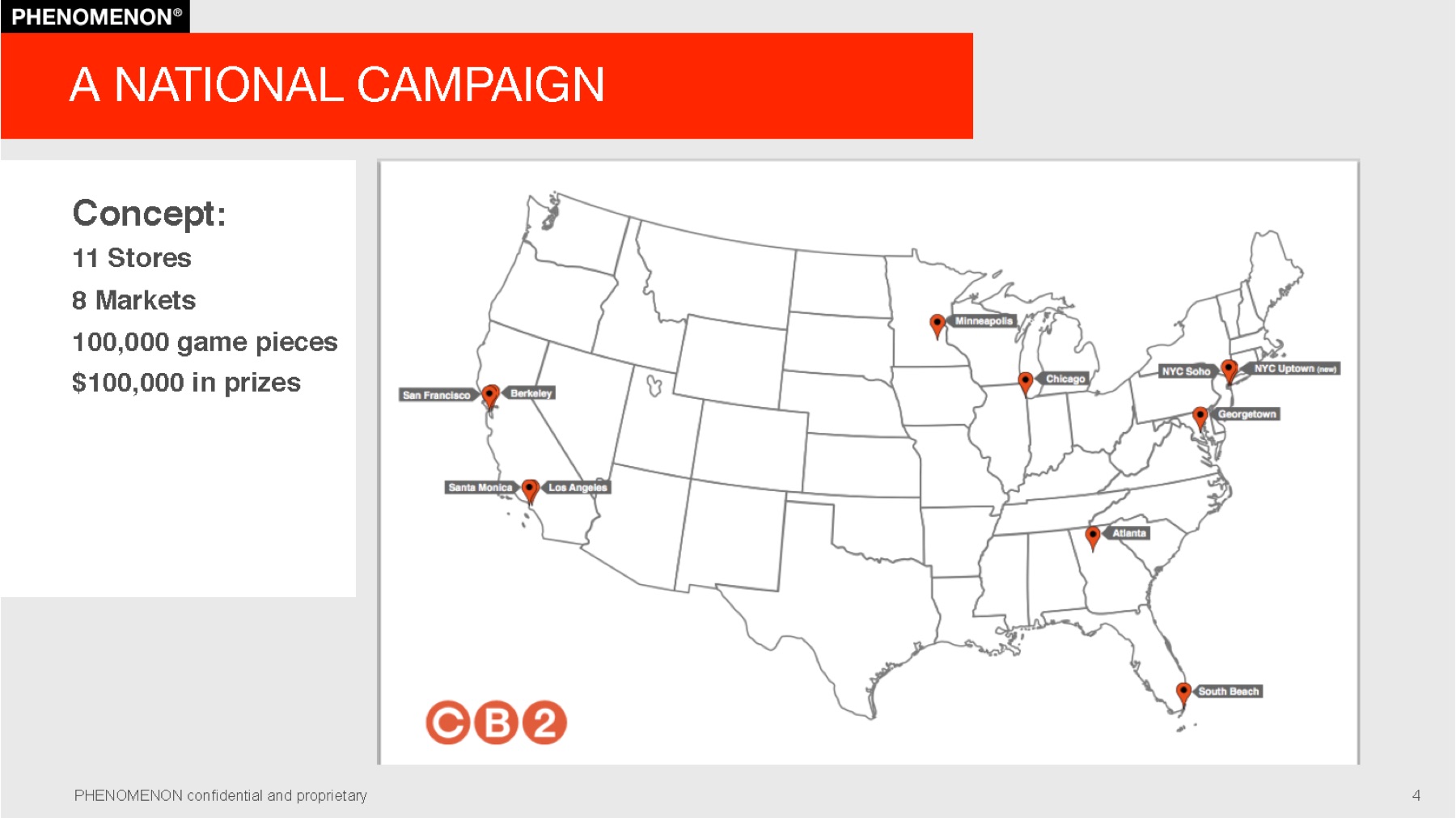
  4. CB2 project plan slide 4: A national campaign across 11 markets, with 100,000 game pieces and $100,000 in prizes.
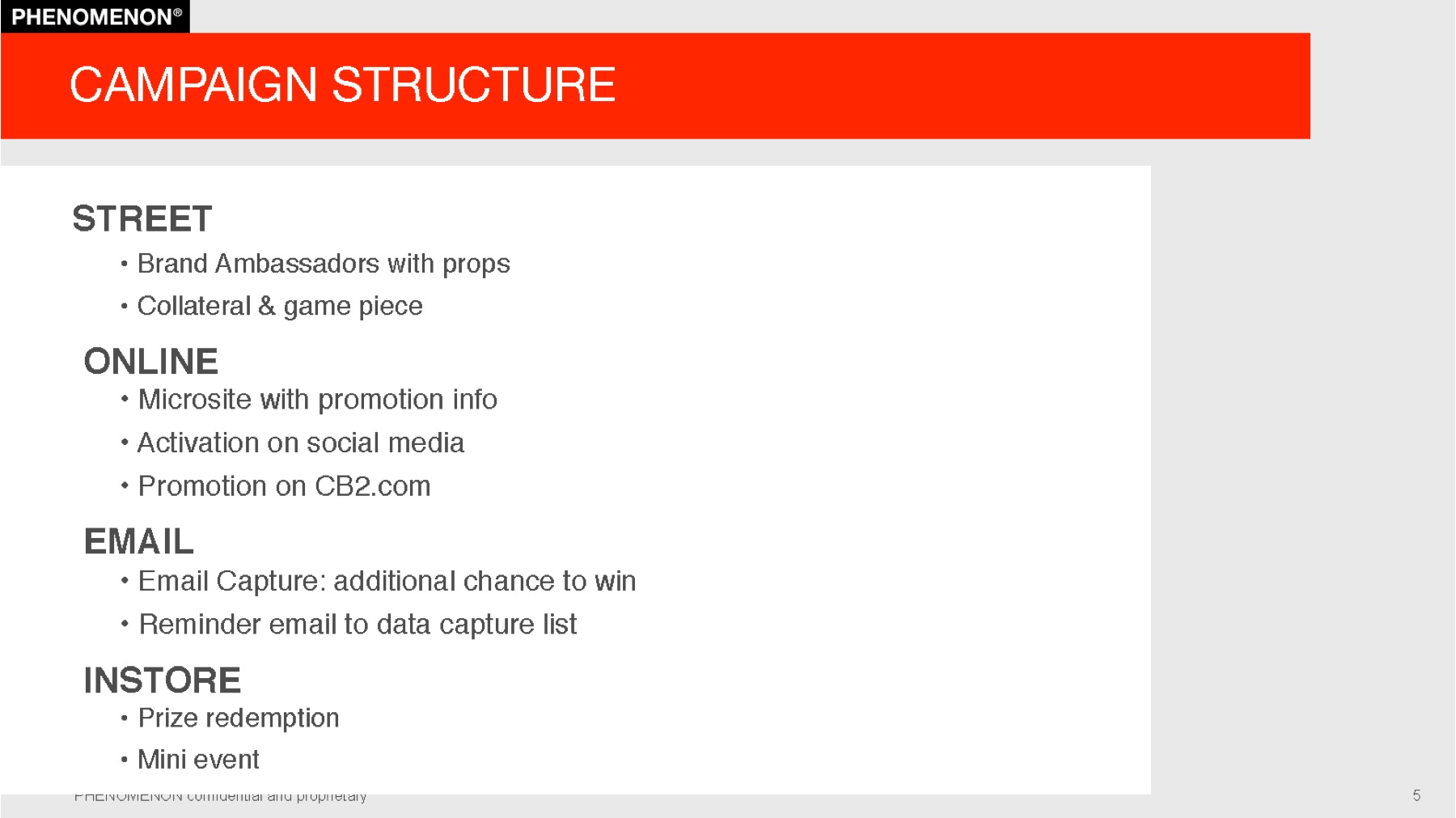
  5. CB2 project plan slide 5: Campaign structure: street, online, email, and in-store.
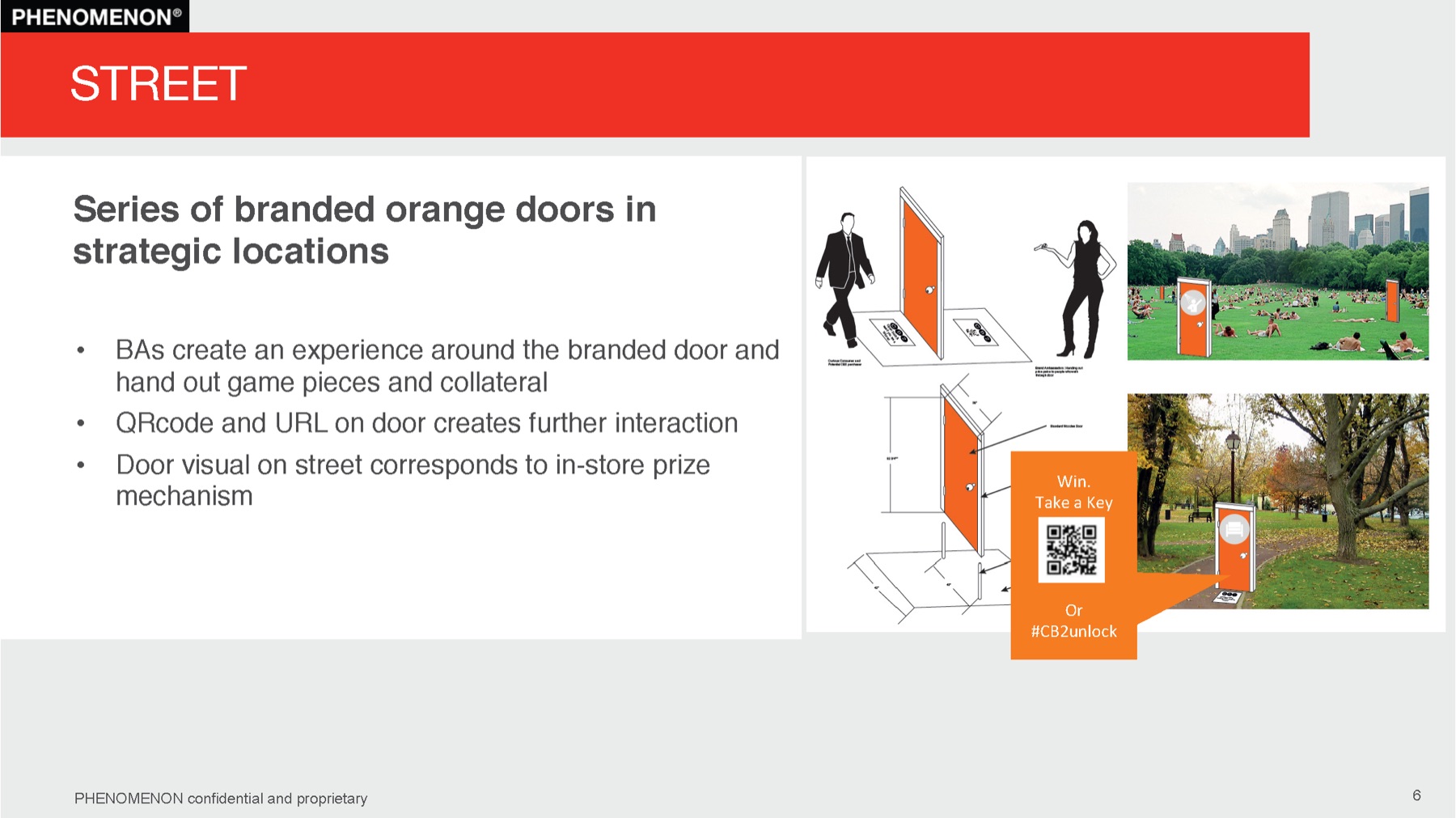
  6. CB2 project plan slide 6: Street: orange doors placed in strategic locations around each city.
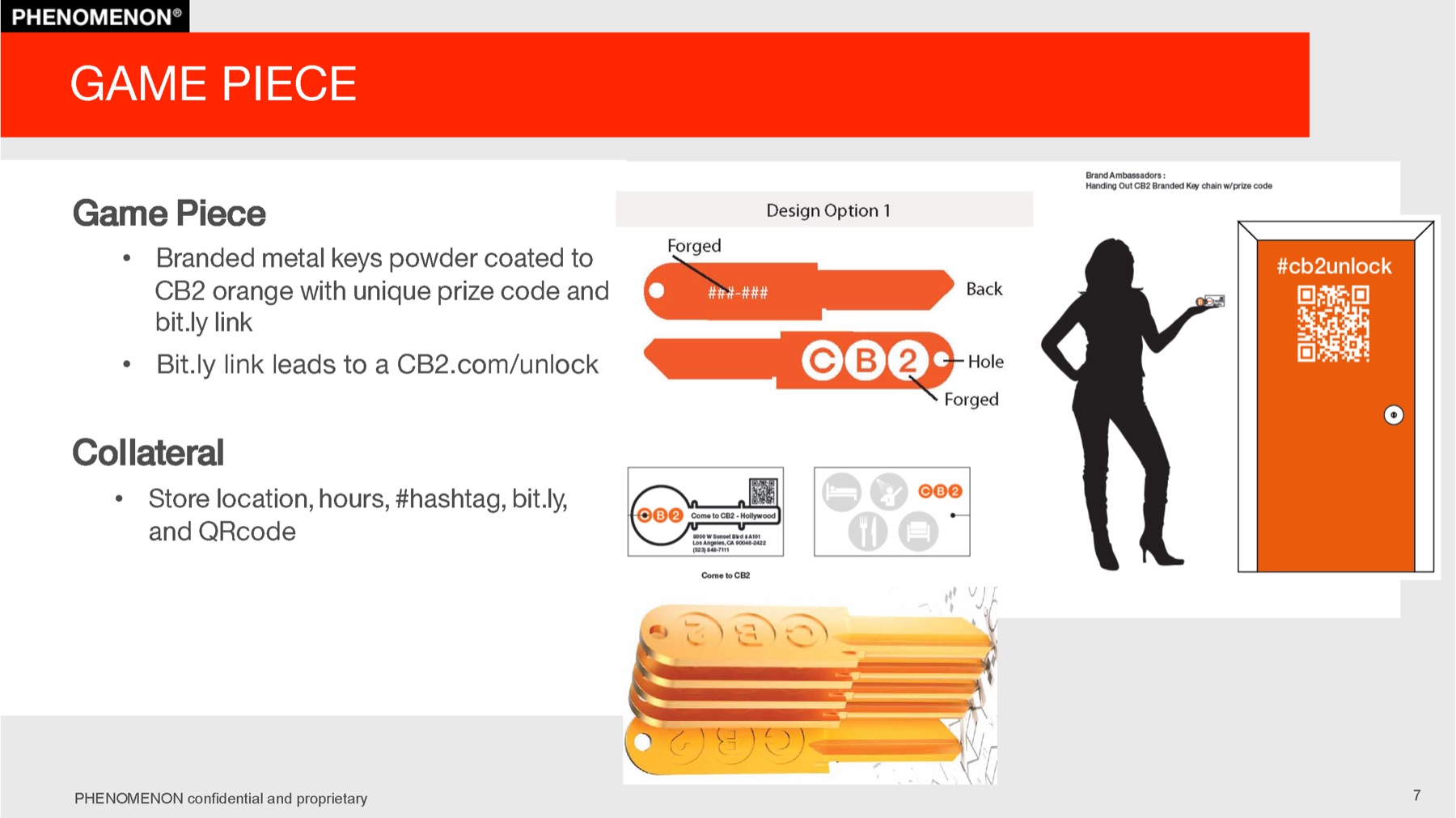
  7. CB2 project plan slide 7: The game piece: a branded key and a card or tag that lead to the CB2 microsite.
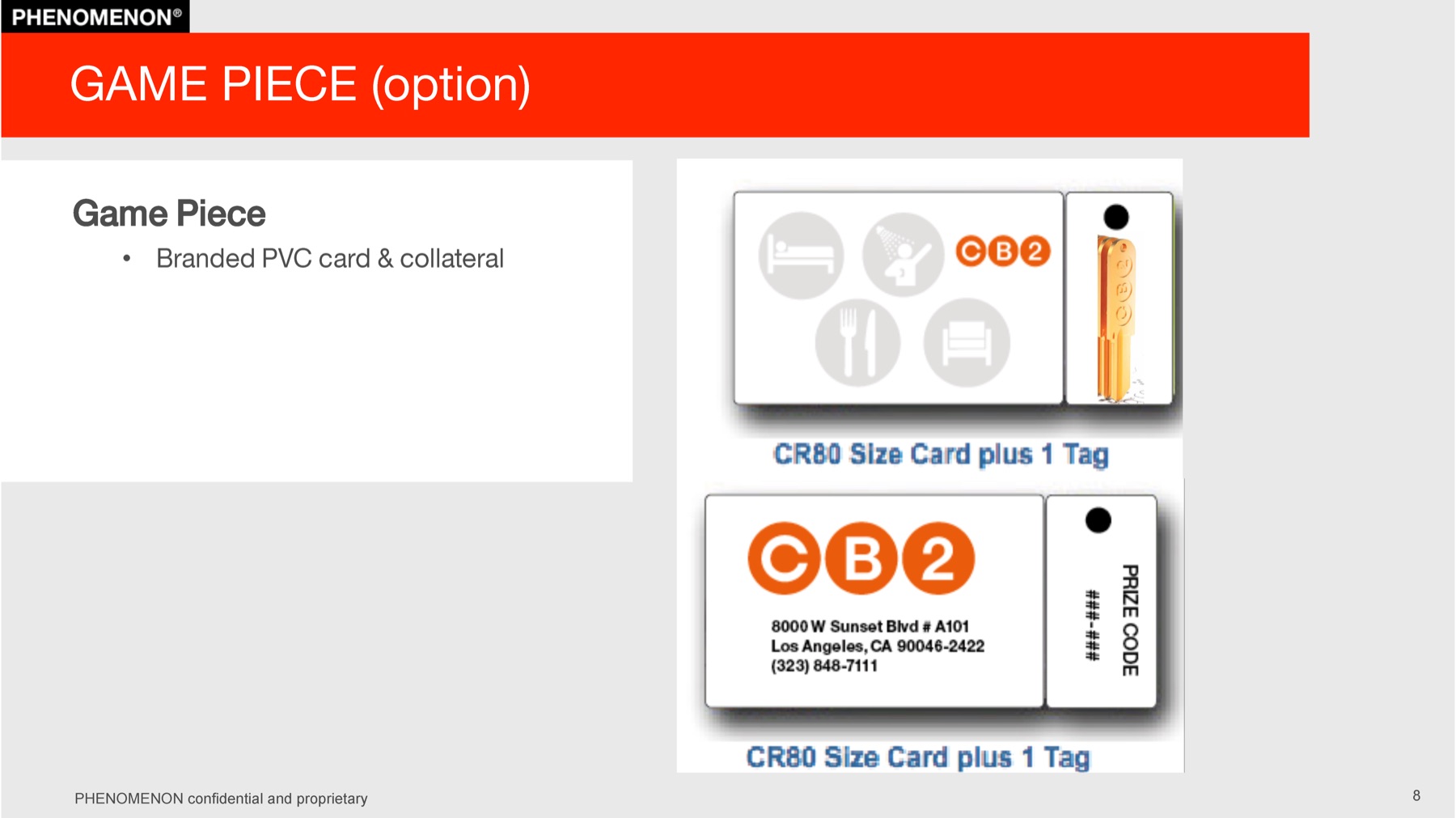
  8. CB2 project plan slide 8: The game piece option: a branded PVC card with collateral.
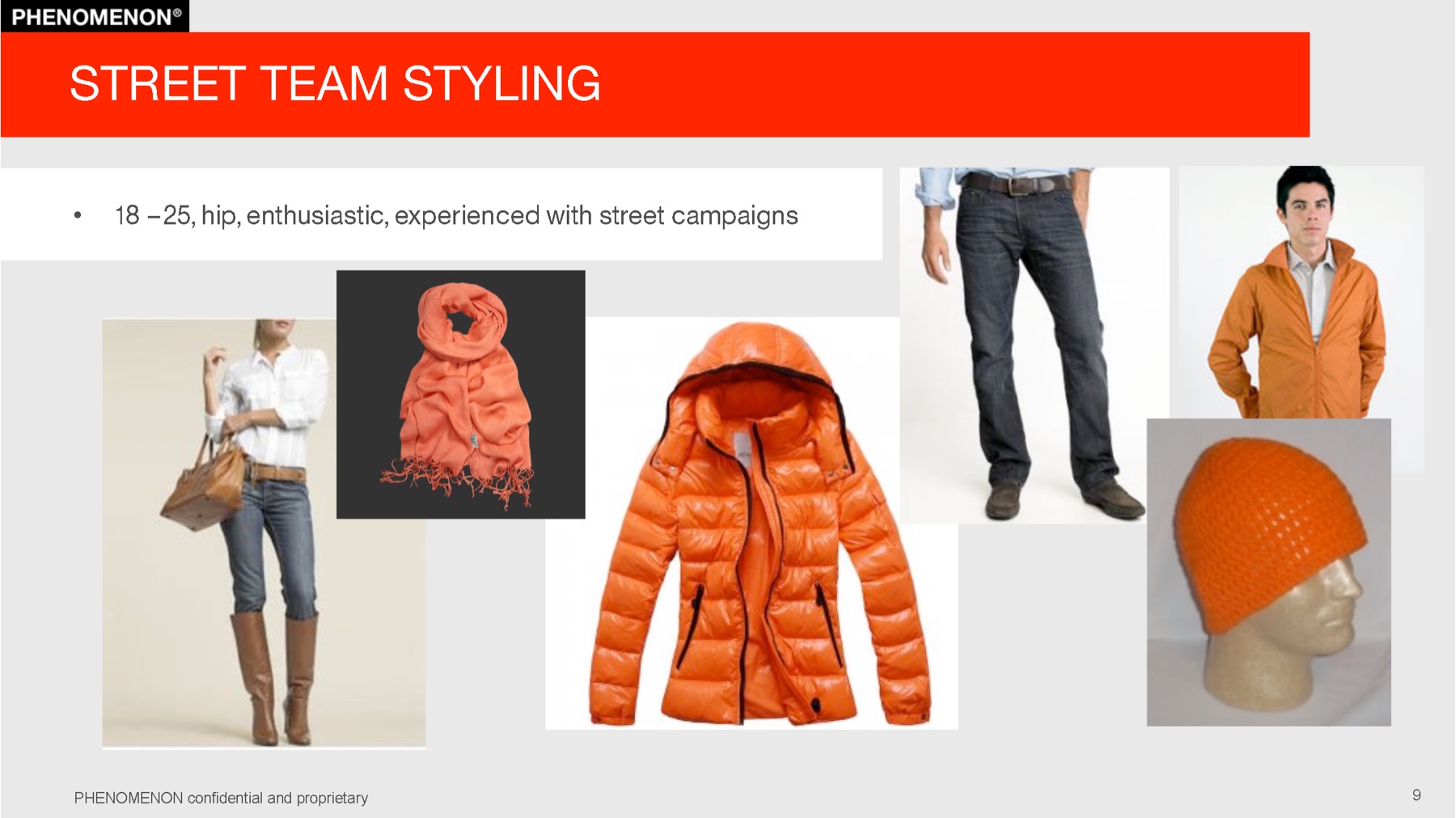
  9. CB2 project plan slide 9: Street team styling: Brand Ambassadors in orange outerwear.
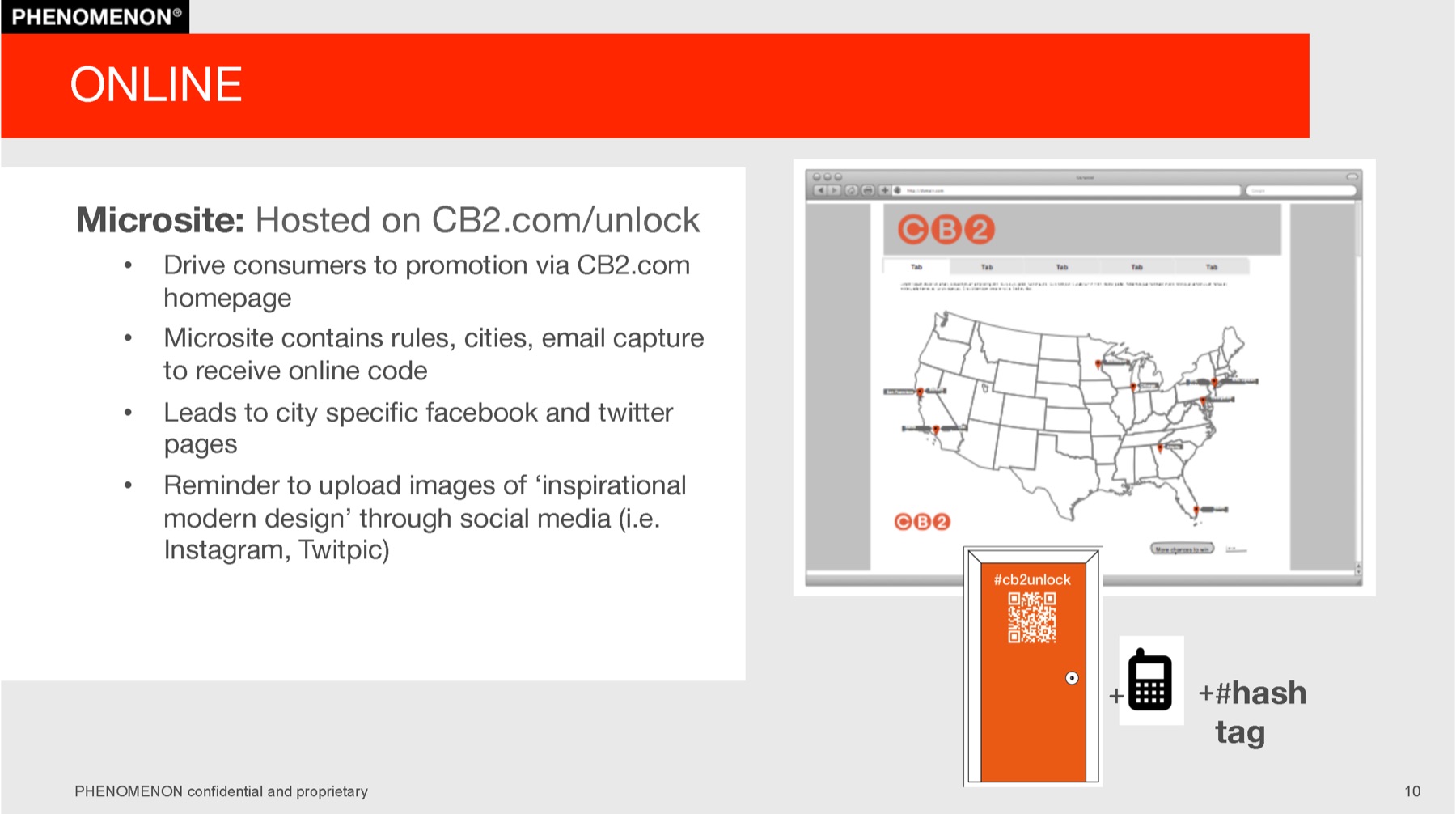
  10. CB2 project plan slide 10: Online: a microsite hosted on CB2.com with a map of participating locations.
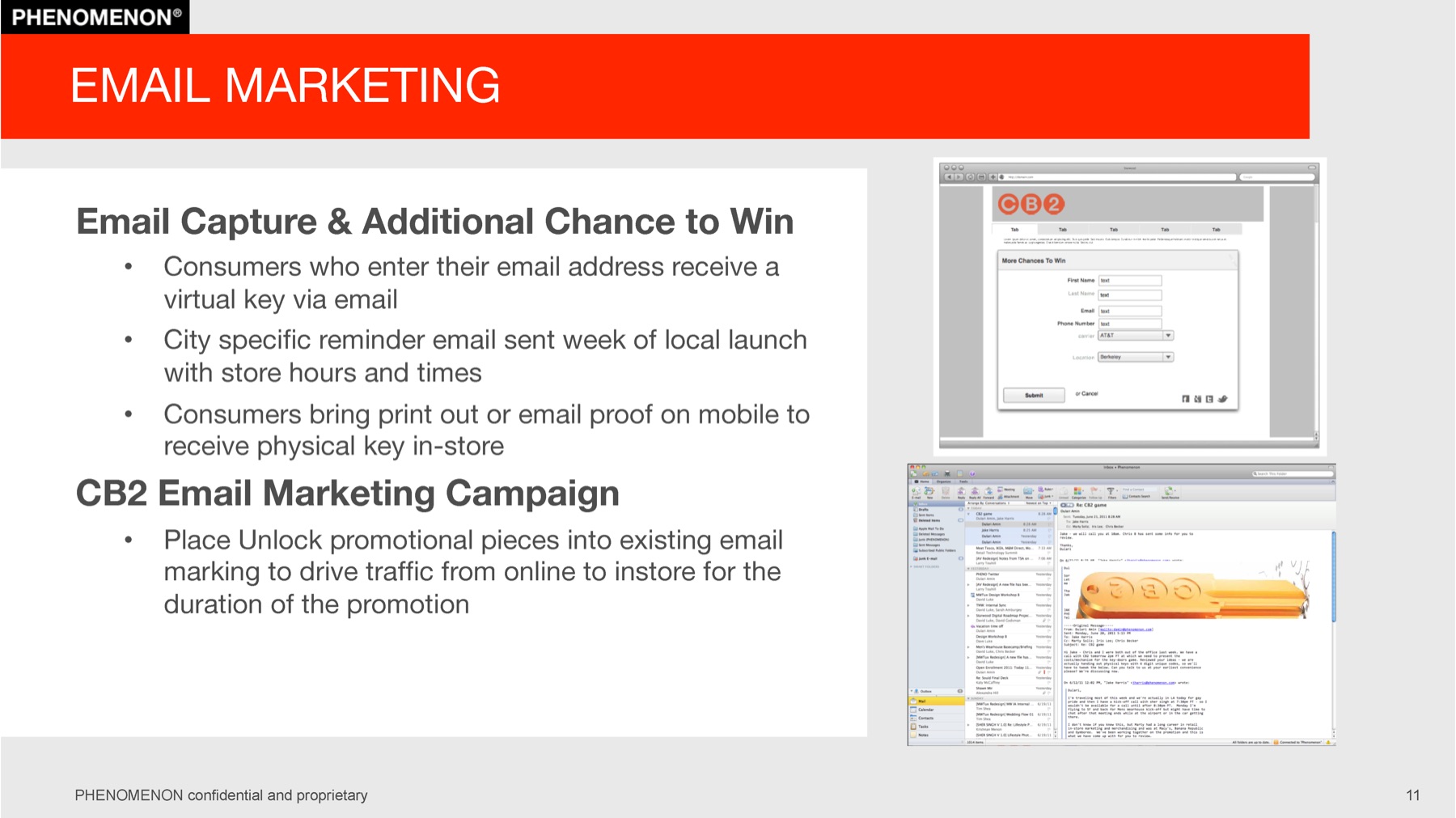
  11. CB2 project plan slide 11: Email marketing: capture addresses and give people an additional chance to win.
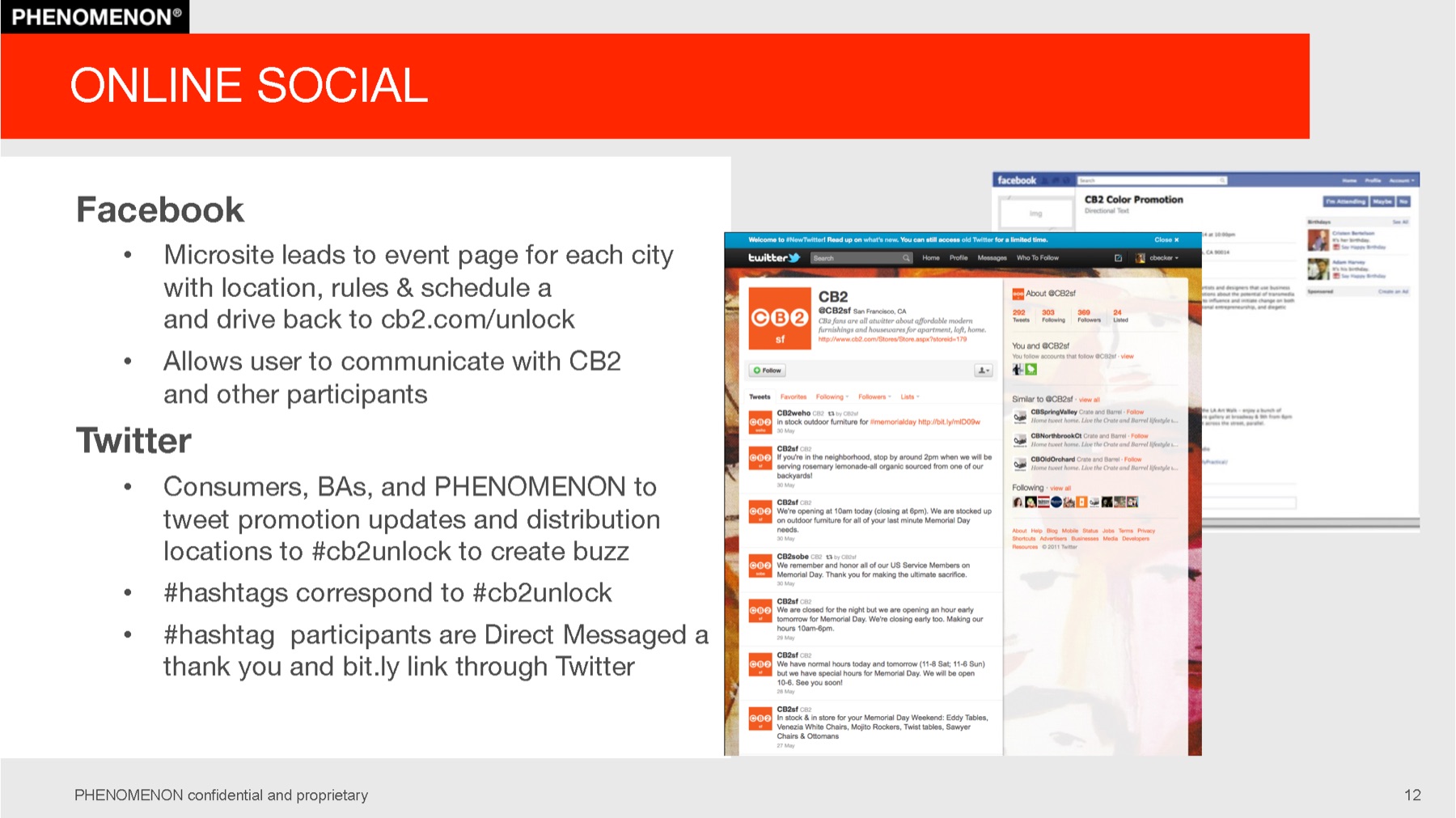
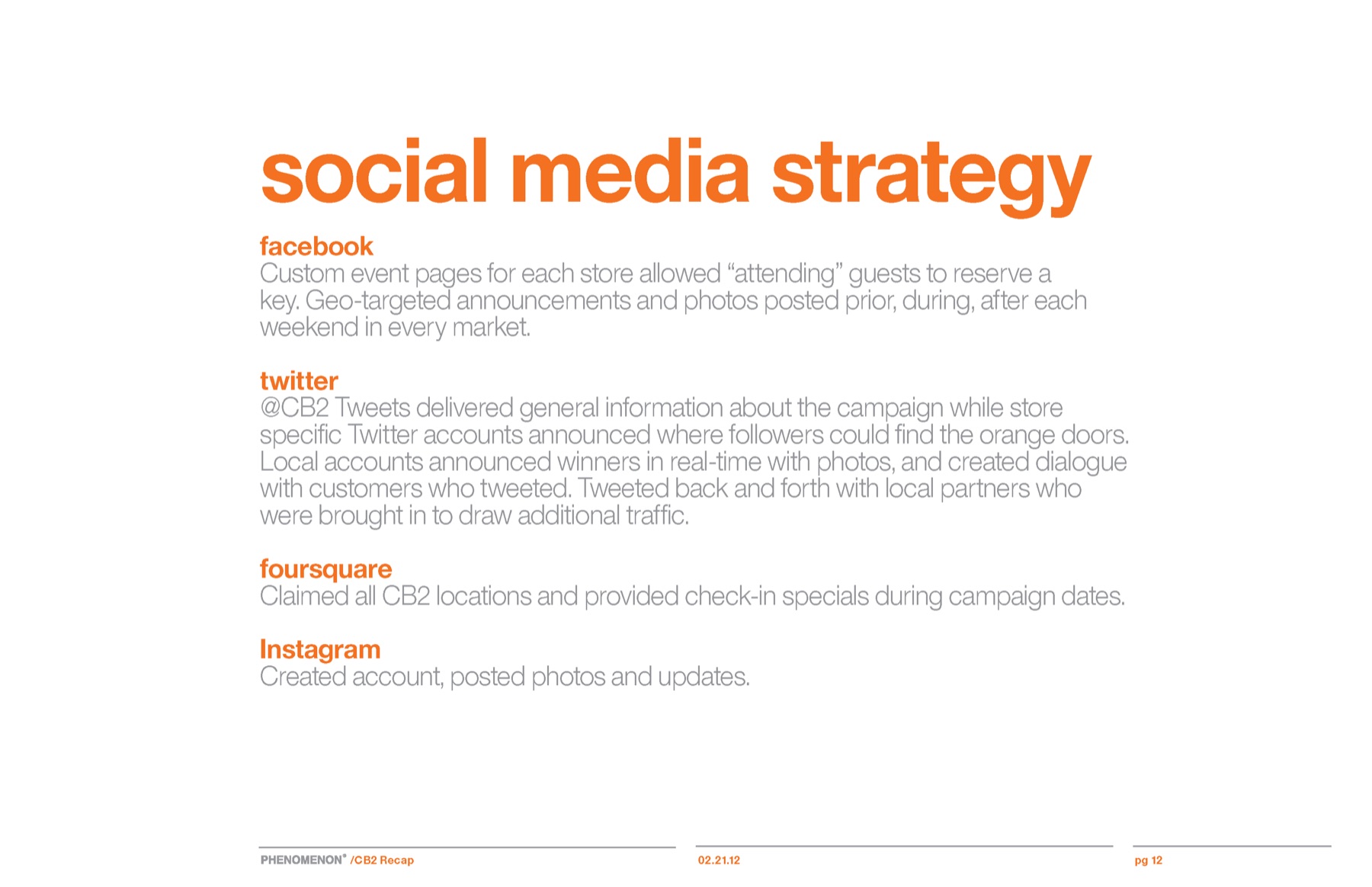
  12. CB2 project plan slide 12: Online social: Facebook, Twitter, and Instagram plans.
  13. CB2 project plan slide 13: In store: the redemption experience at the door, and store ambience.
  14. CB2 project plan slide 14: Execution plan: timing and schedule for the Oct–Dec campaign.
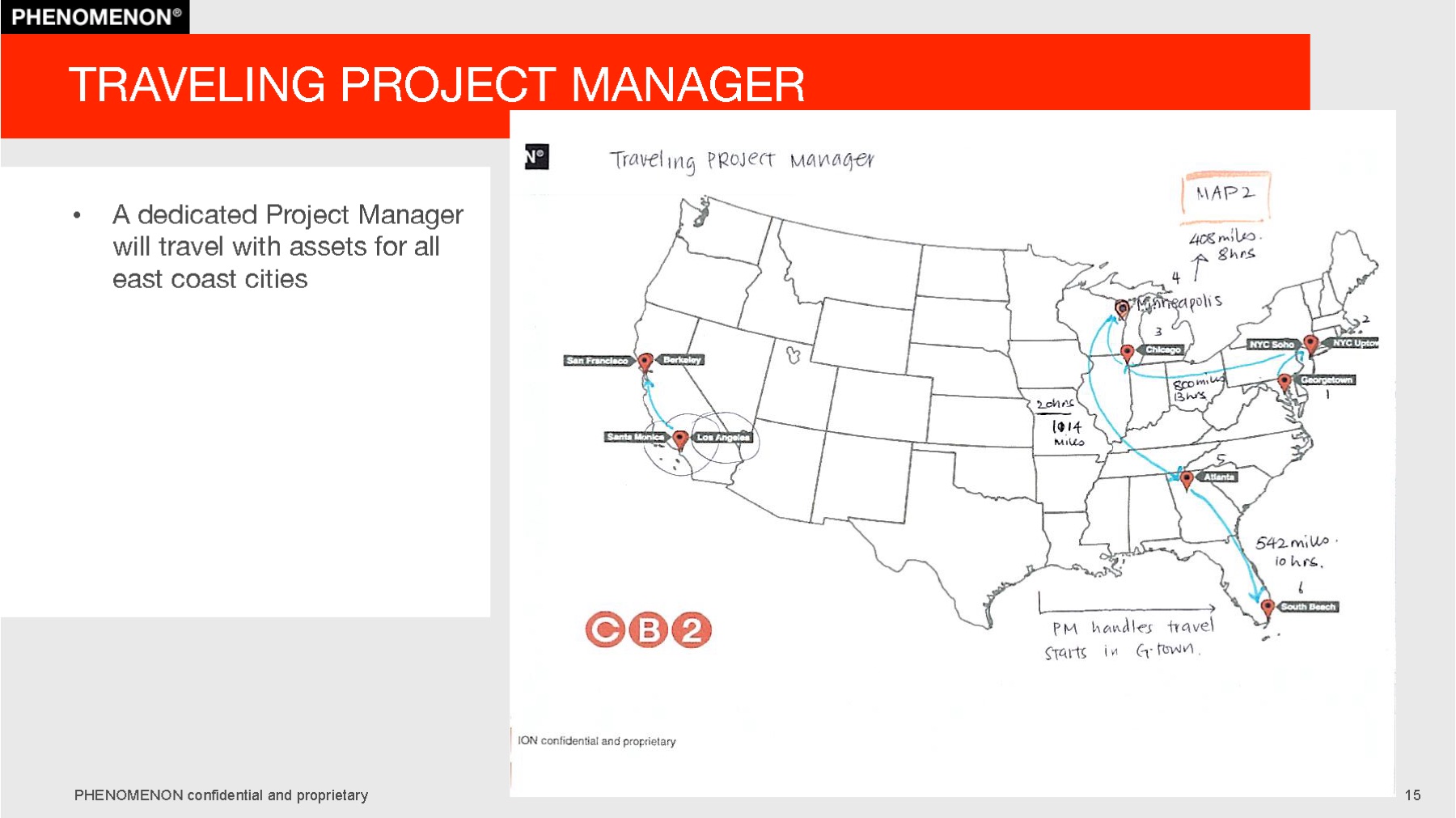
  15. CB2 project plan slide 15: A traveling project manager to run each city.
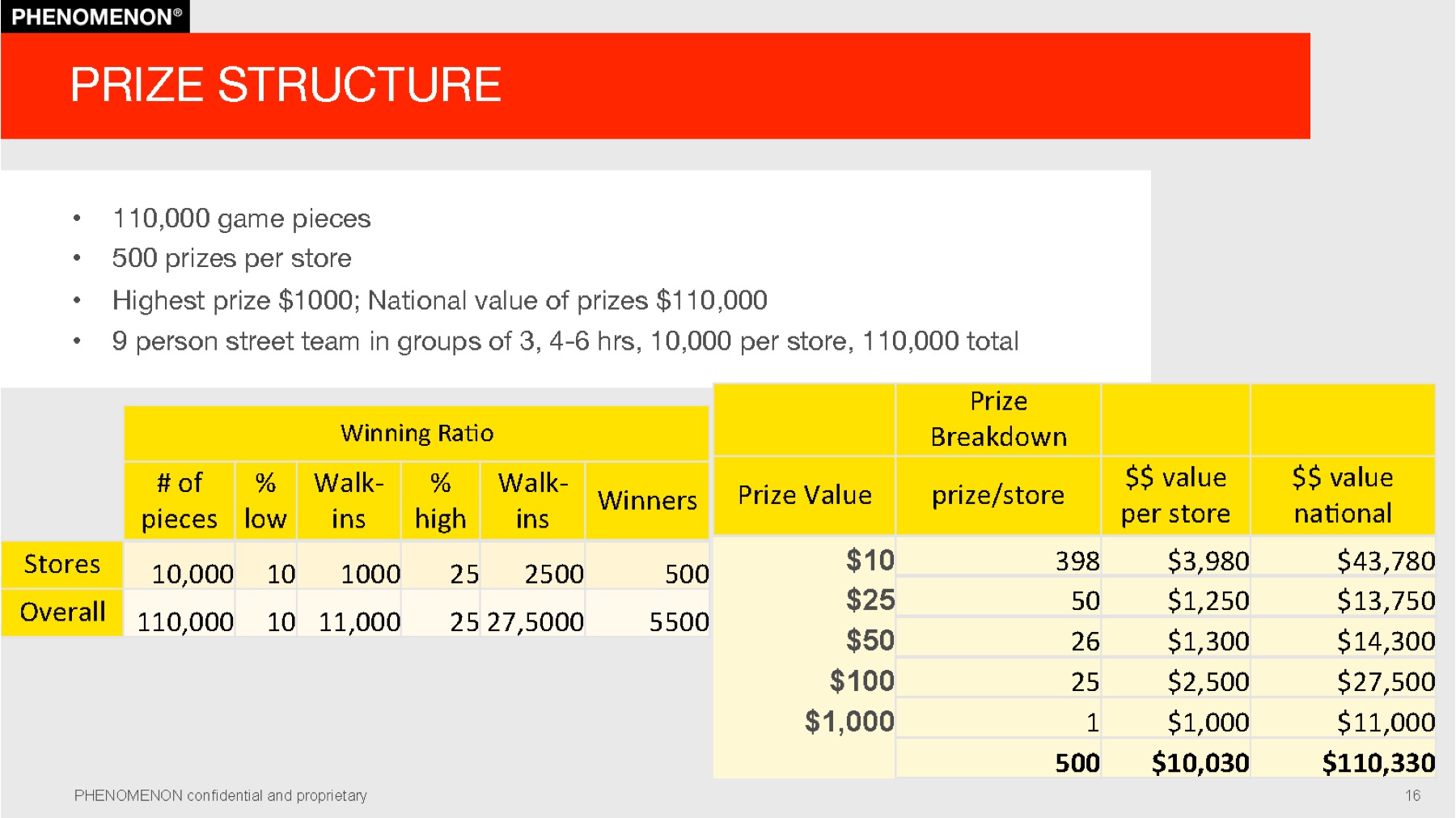
  16. CB2 project plan slide 16: Prize structure: winning odds and prize values across stores.
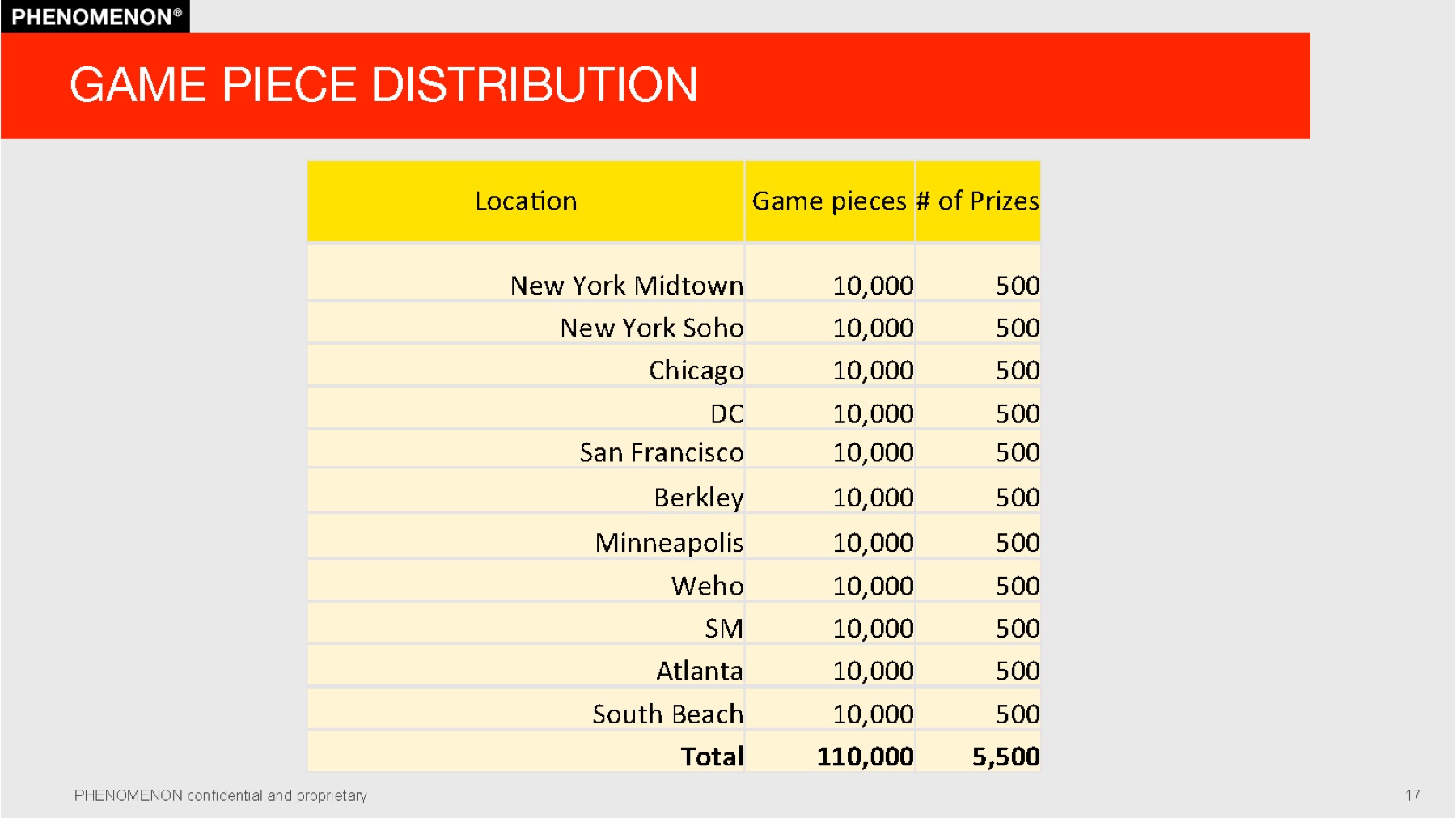
  17. CB2 project plan slide 17: Game piece distribution by store.

1 / 17

    In store

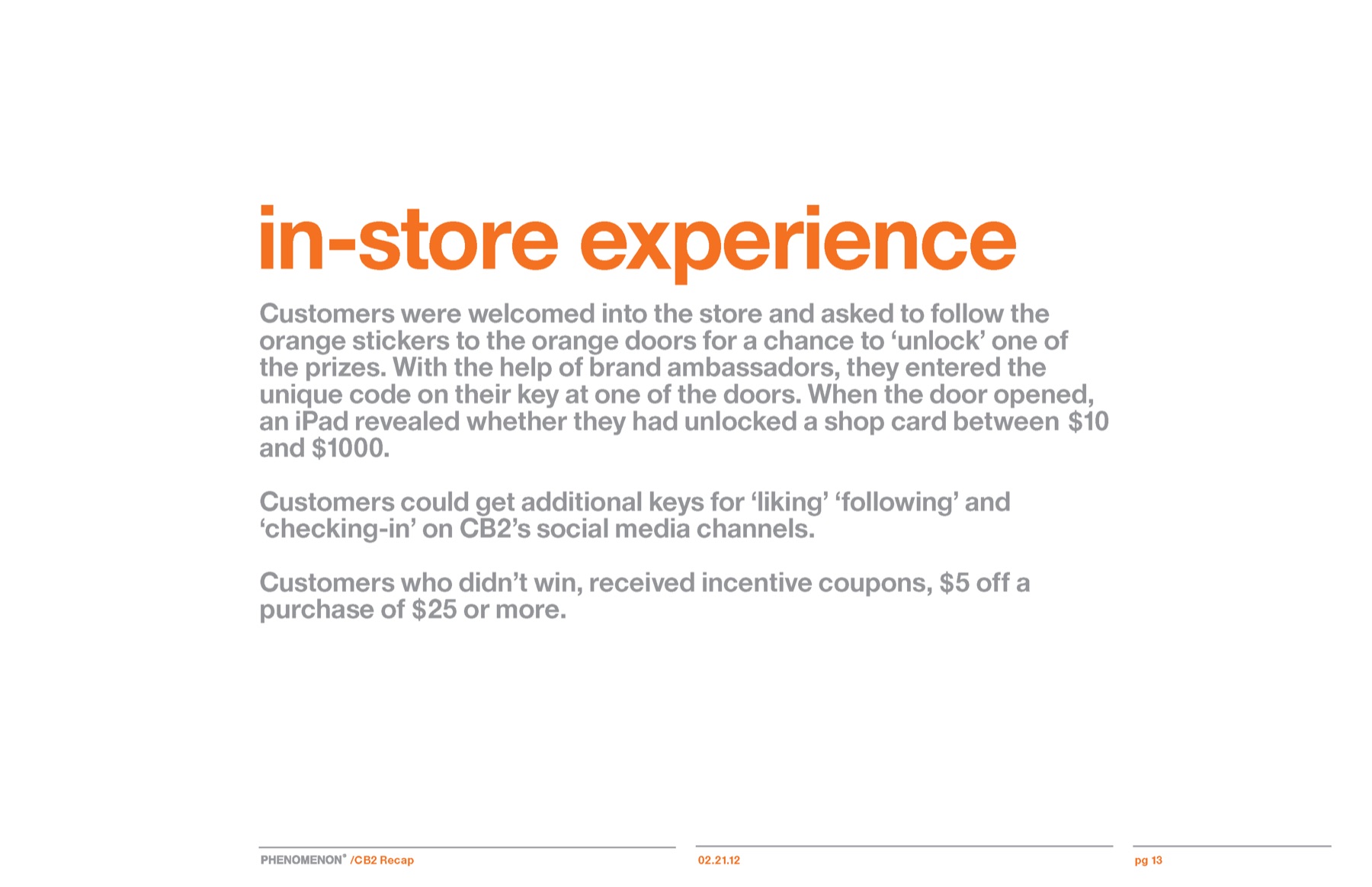
    Customers brought their key to the store door. A keypad and an iPad revealed whether they had won.
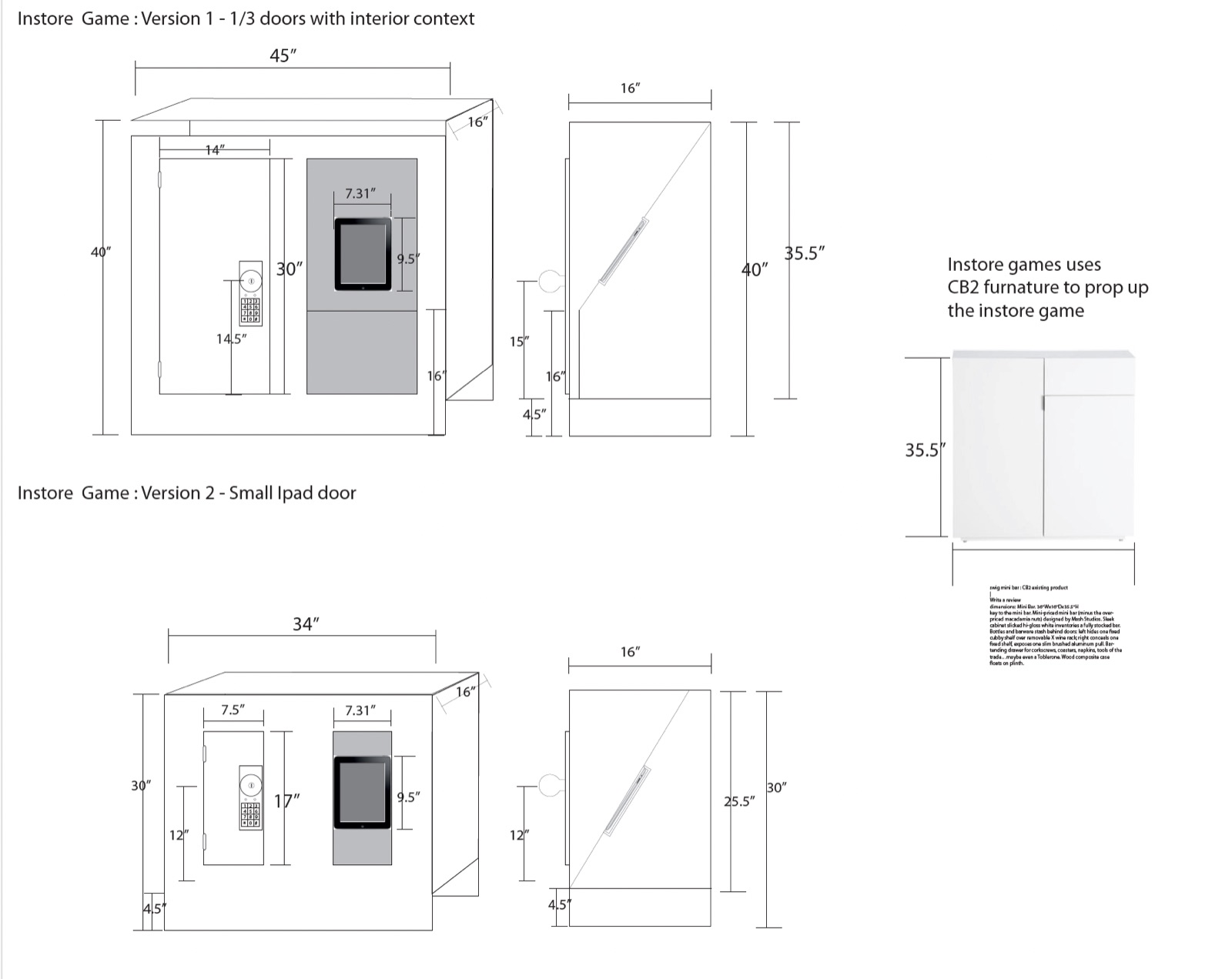
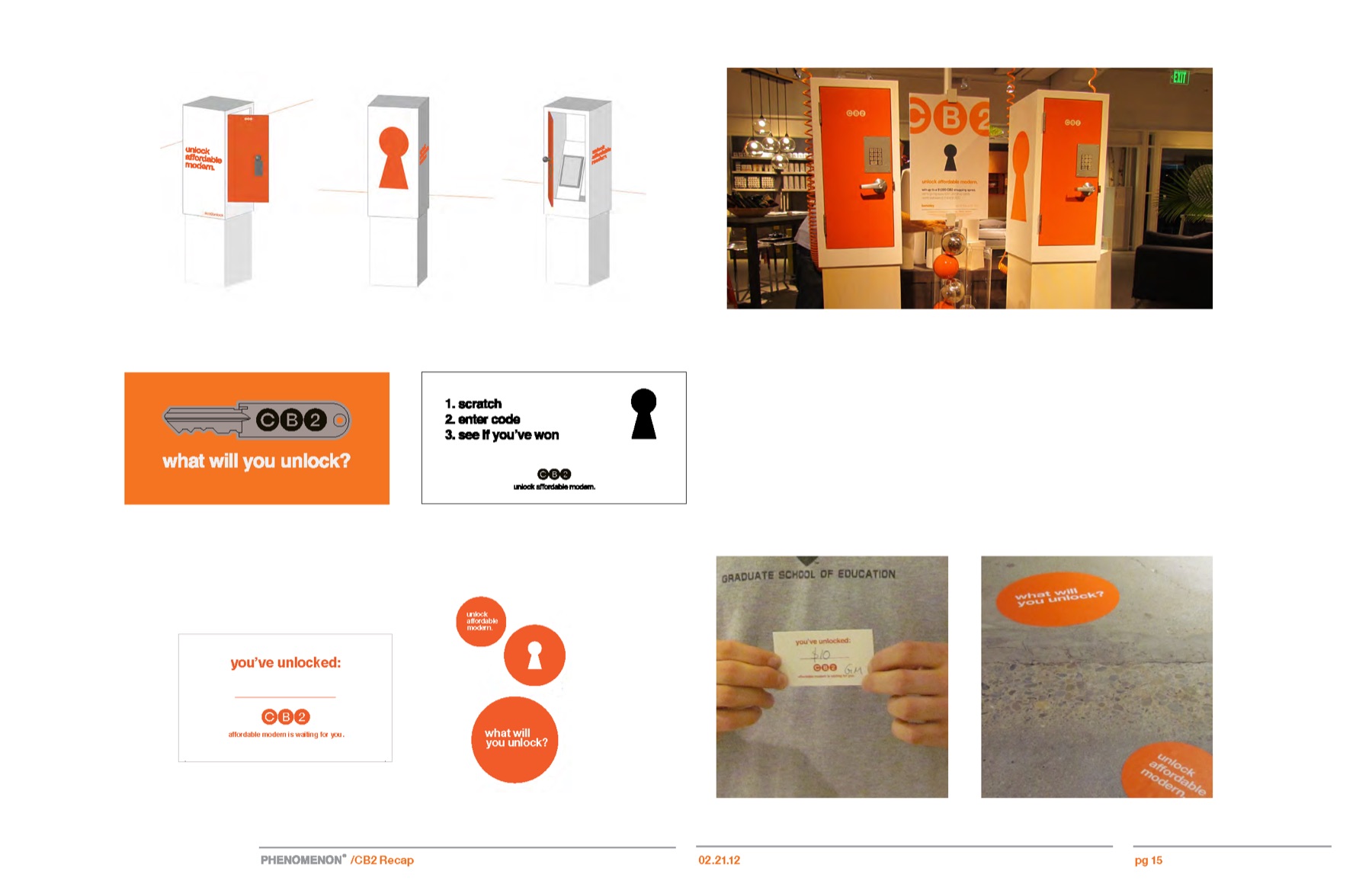
    Technical drawings of two in-store game cabinets with a keypad door and an iPad
    The in-store game. Two versions of the cabinet, with a keypad door and an iPad, built on CB2 furniture.

    What happened

    The wrap-up deck: the street team, the microsite and in-store photos, and the results by market. Flip through all 21 slides.
    1. CB2 campaign results slide 1: Title slide: unlock affordable modern, a national drive-to-store campaign.
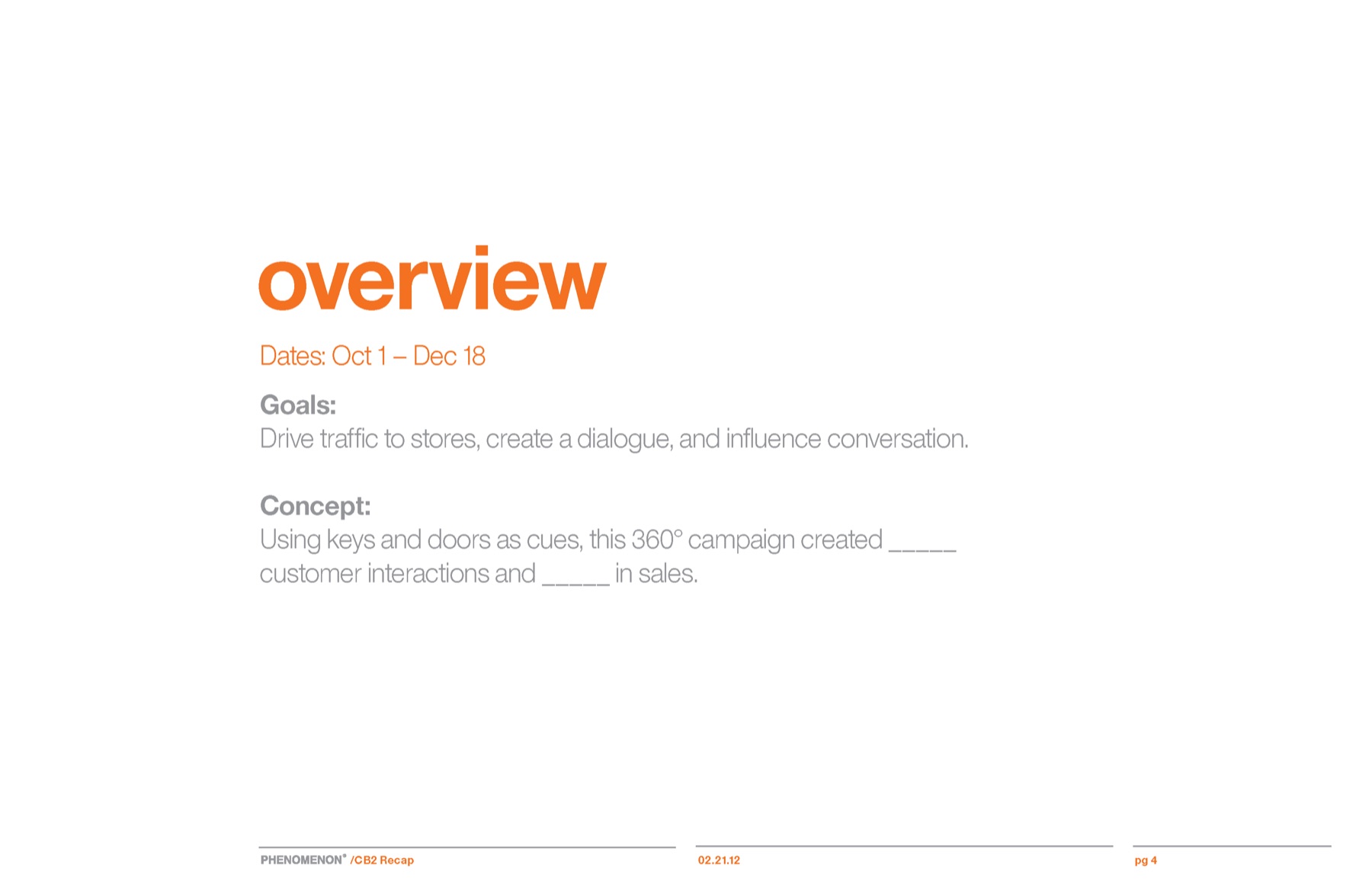
    2. CB2 campaign results slide 2: Overview: the goals and concept of the campaign.
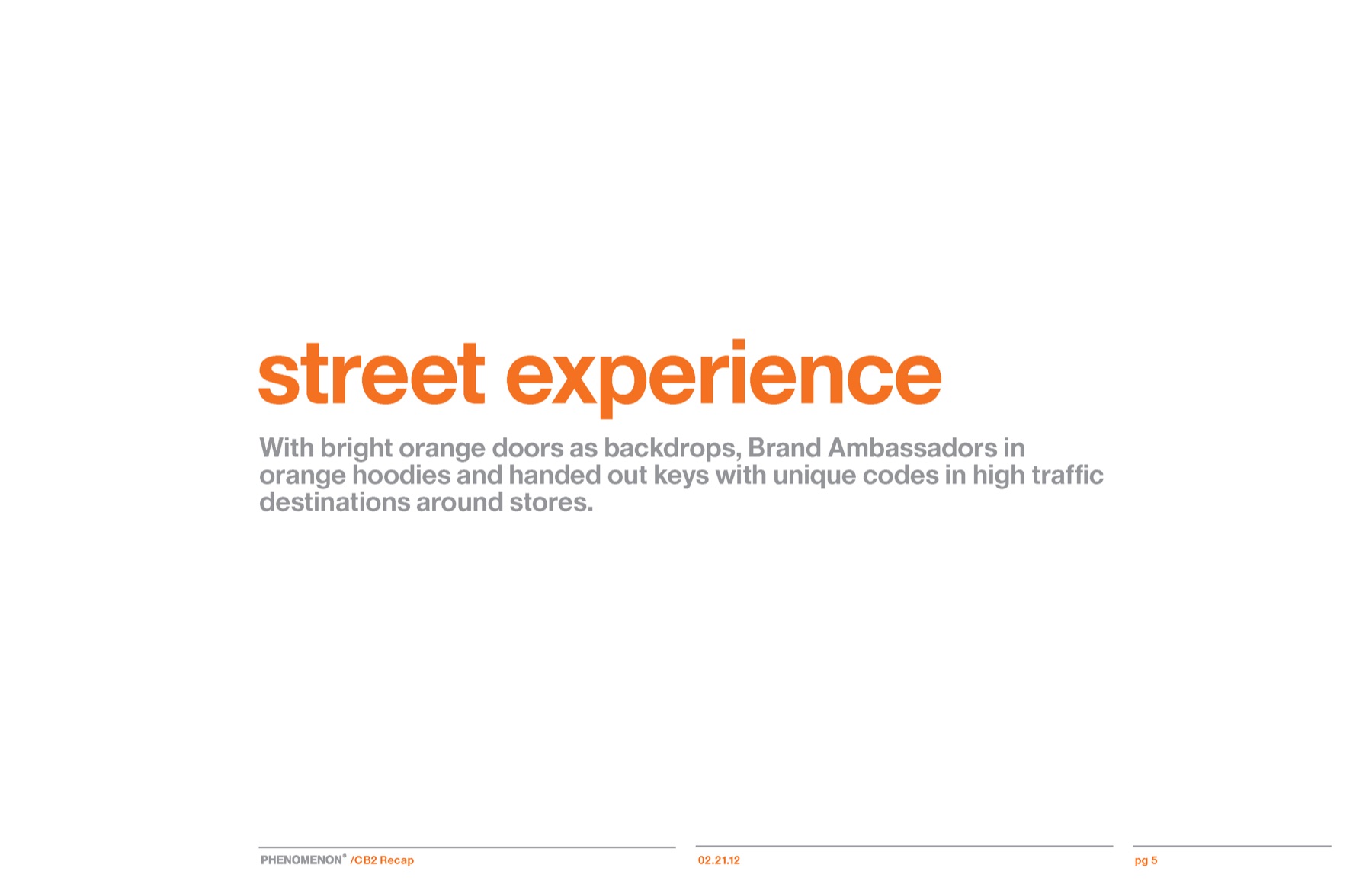
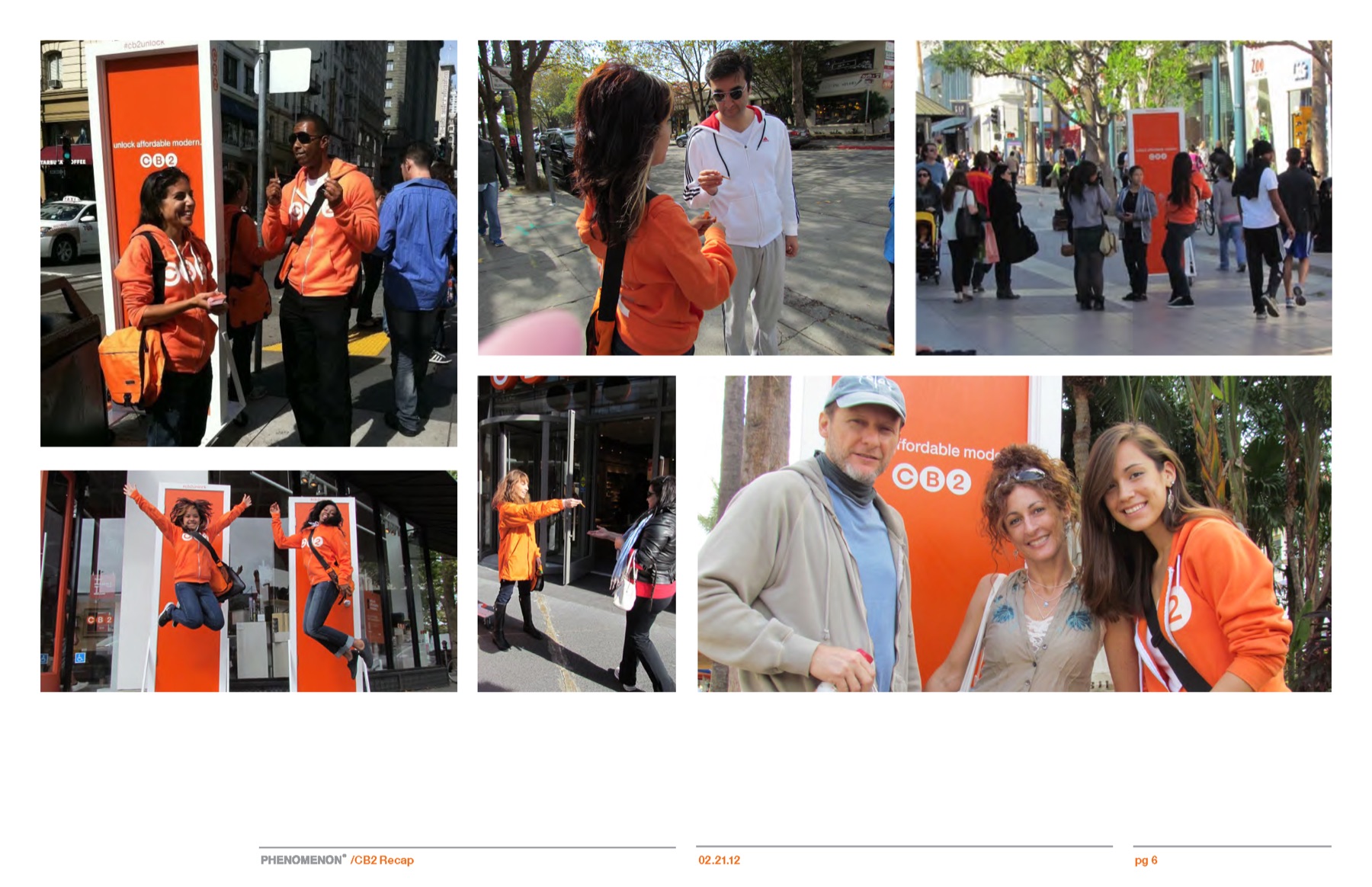
    3. CB2 campaign results slide 3: Street experience: Brand Ambassadors with bright orange doors on landscape.
    4. CB2 campaign results slide 4: Street team photos from the campaign.
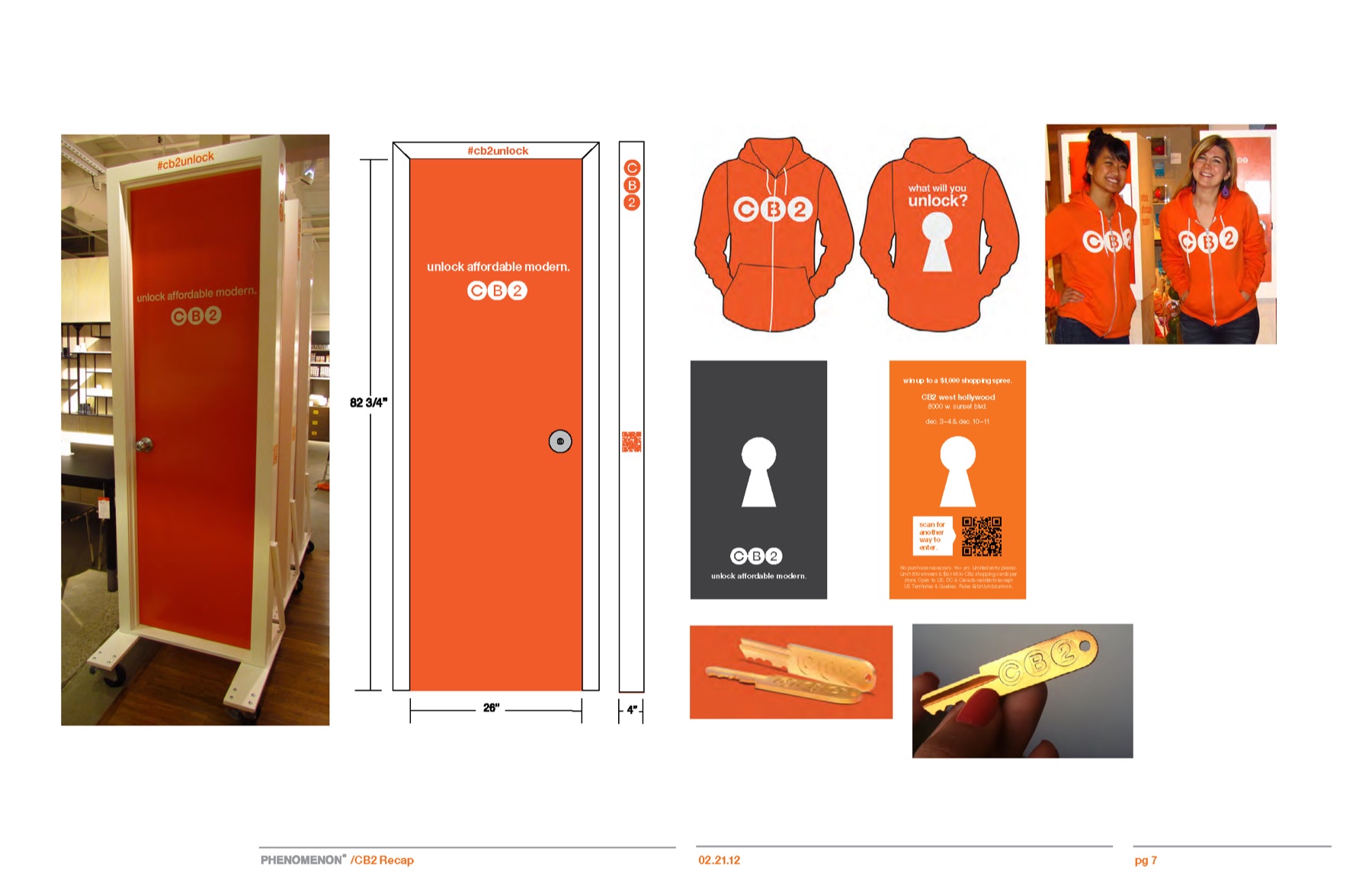
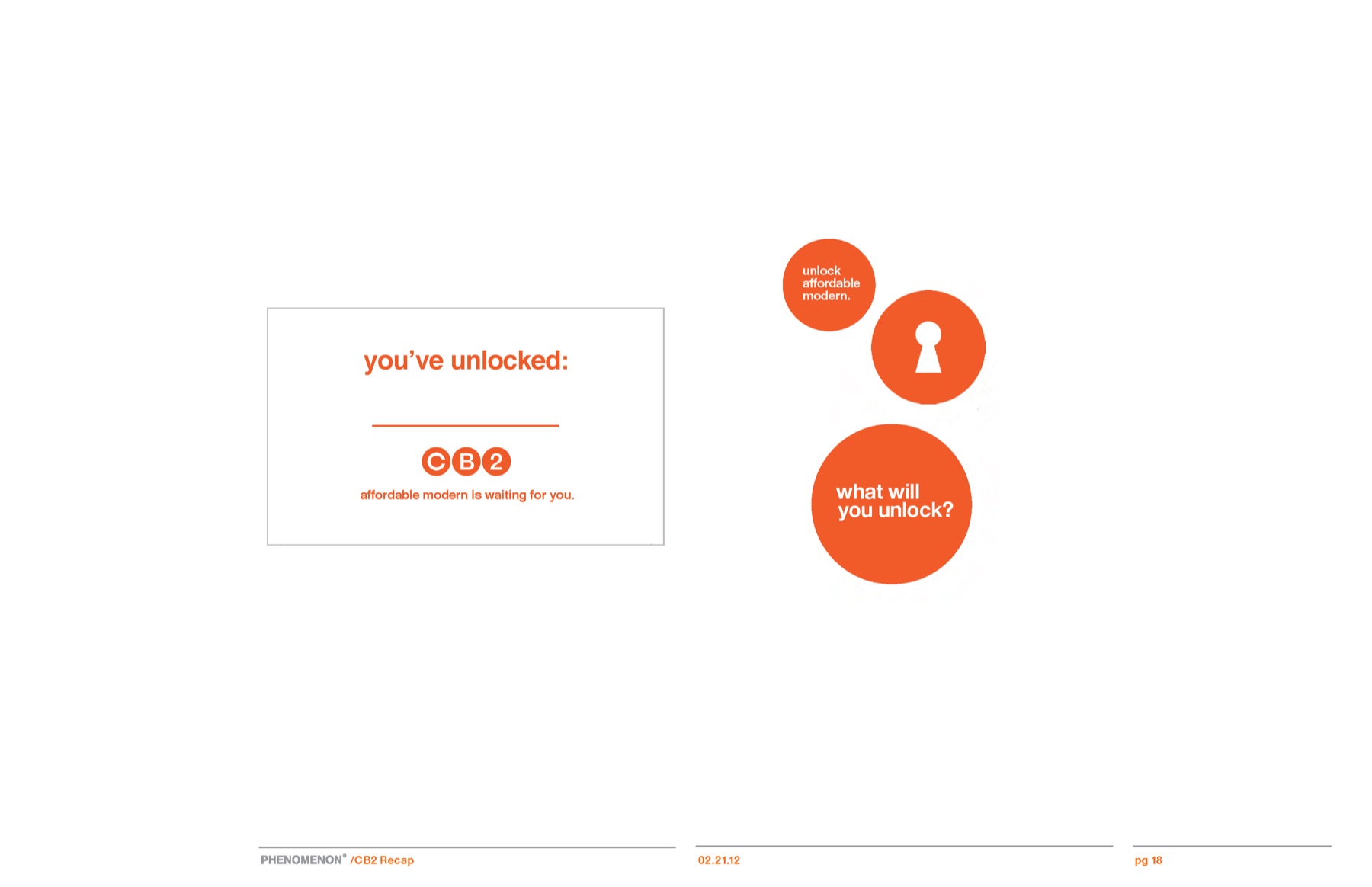
    5. CB2 campaign results slide 5: The orange door graphics and key.
    6. CB2 campaign results slide 6: Online experience: a dedicated microsite.
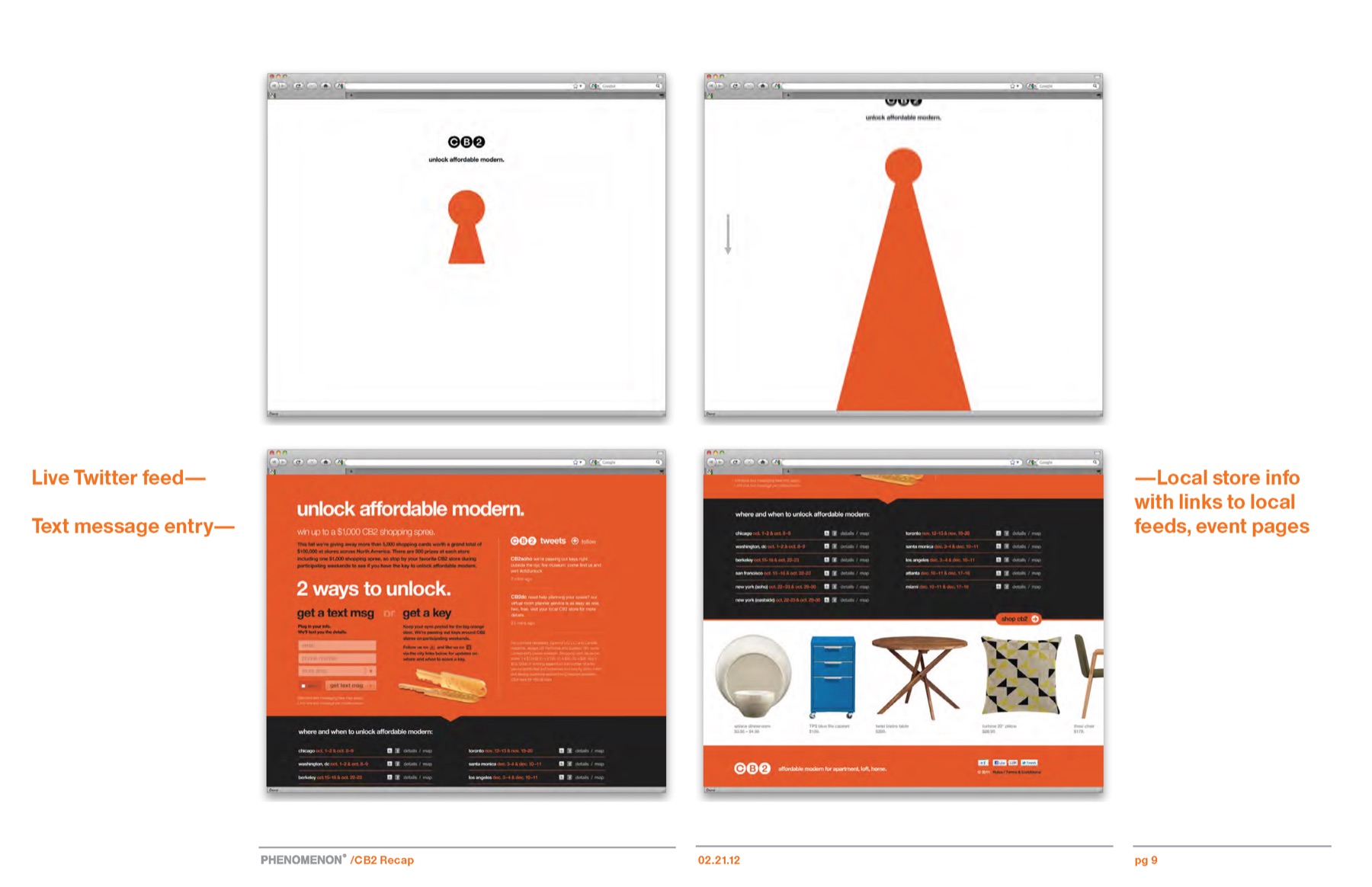
    7. CB2 campaign results slide 7: The microsite design.
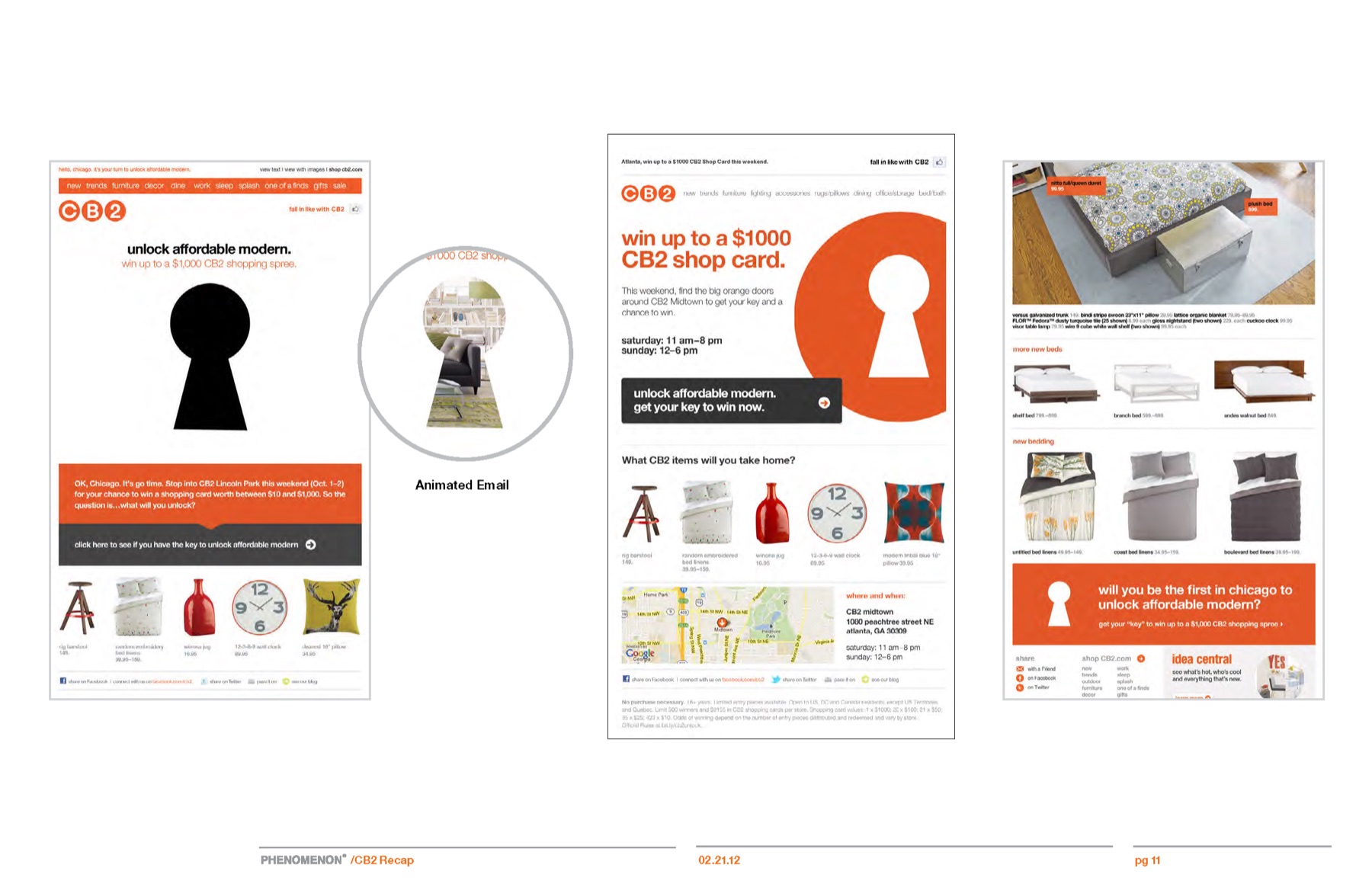
    8. CB2 campaign results slide 8: Email.
    9. CB2 campaign results slide 9: Email design: unlock reveal and the game piece.
    10. CB2 campaign results slide 10: Social media strategy.
    11. CB2 campaign results slide 11: In-store experience: customers unlock the door to win.
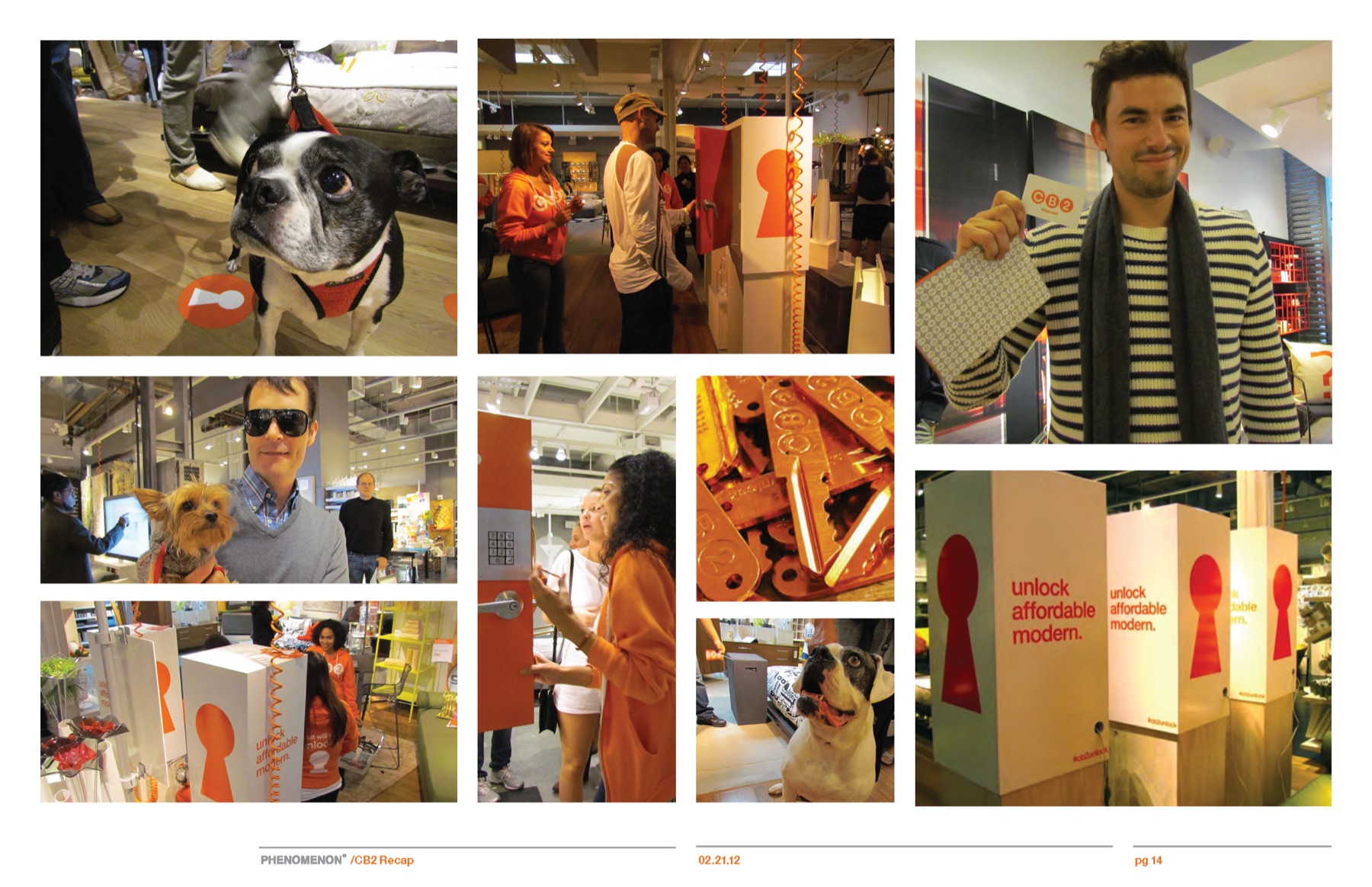
    12. CB2 campaign results slide 12: In-store photos from the stores.
    13. CB2 campaign results slide 13: Door, key, and in-store collateral.
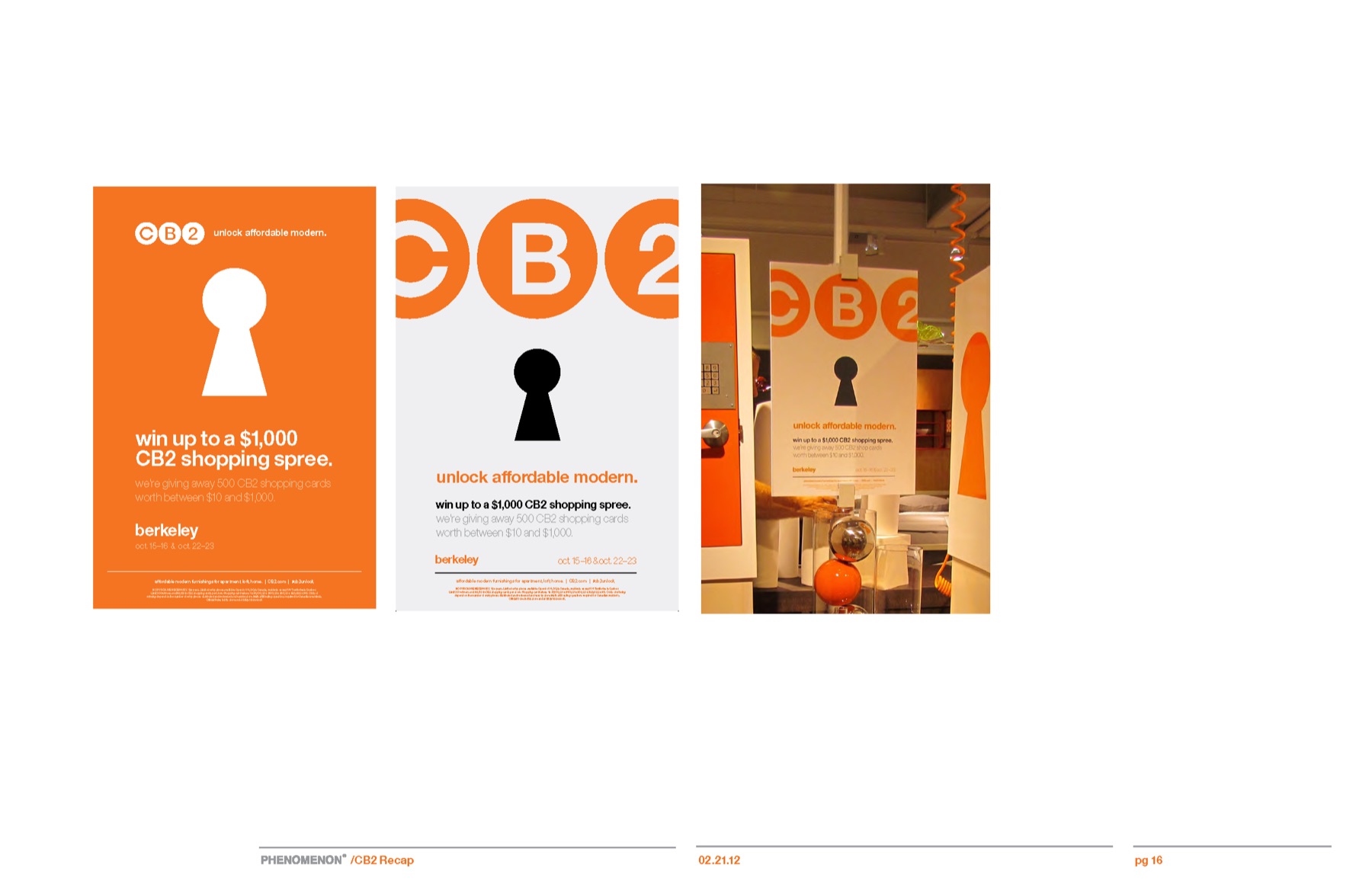
    14. CB2 campaign results slide 14: Branded in-store signage.
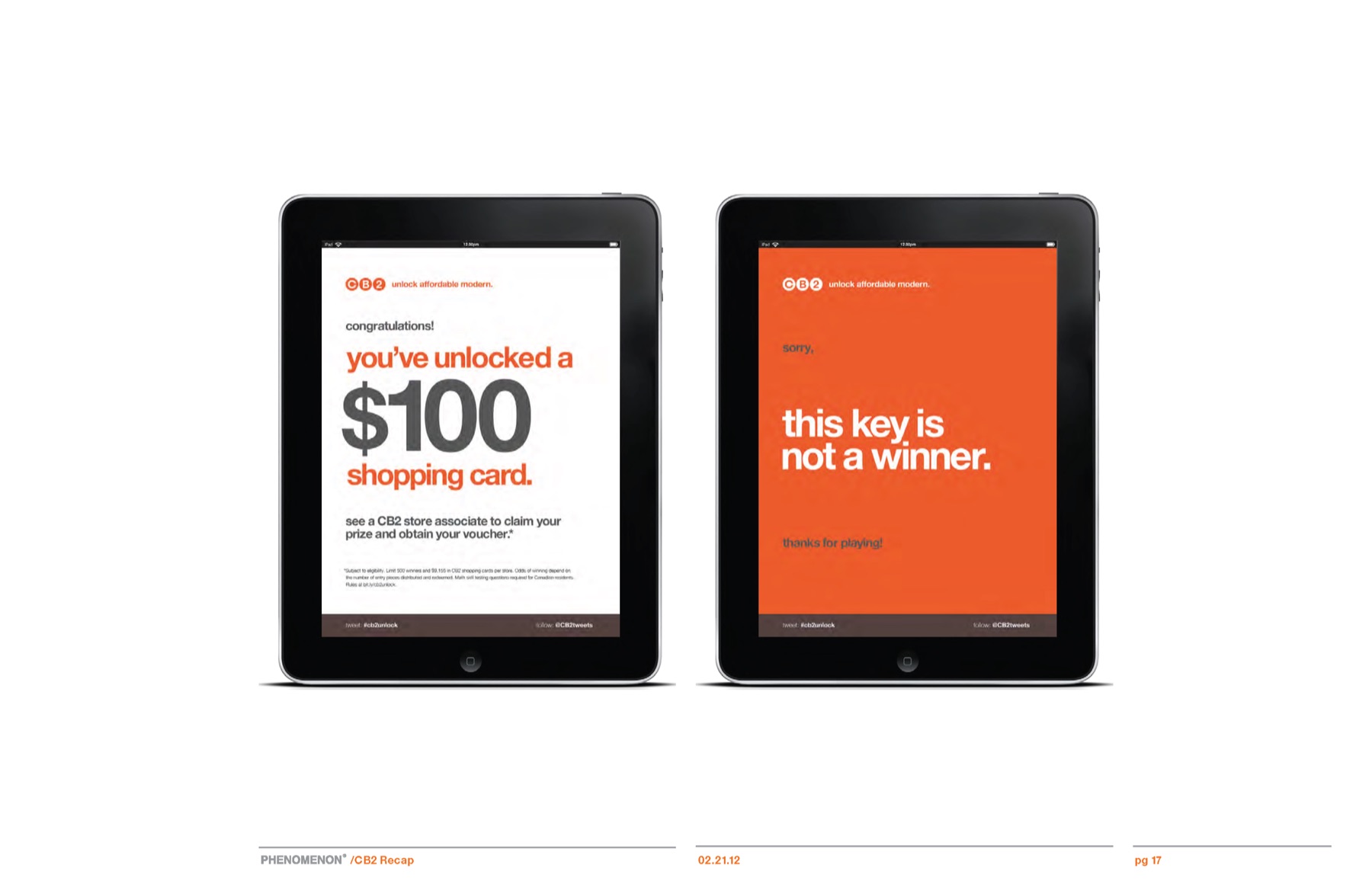
    15. CB2 campaign results slide 15: Digital key and tablet game screens.
    16. CB2 campaign results slide 16: The unlock screens on the microsite.
    17. CB2 campaign results slide 17: Results.
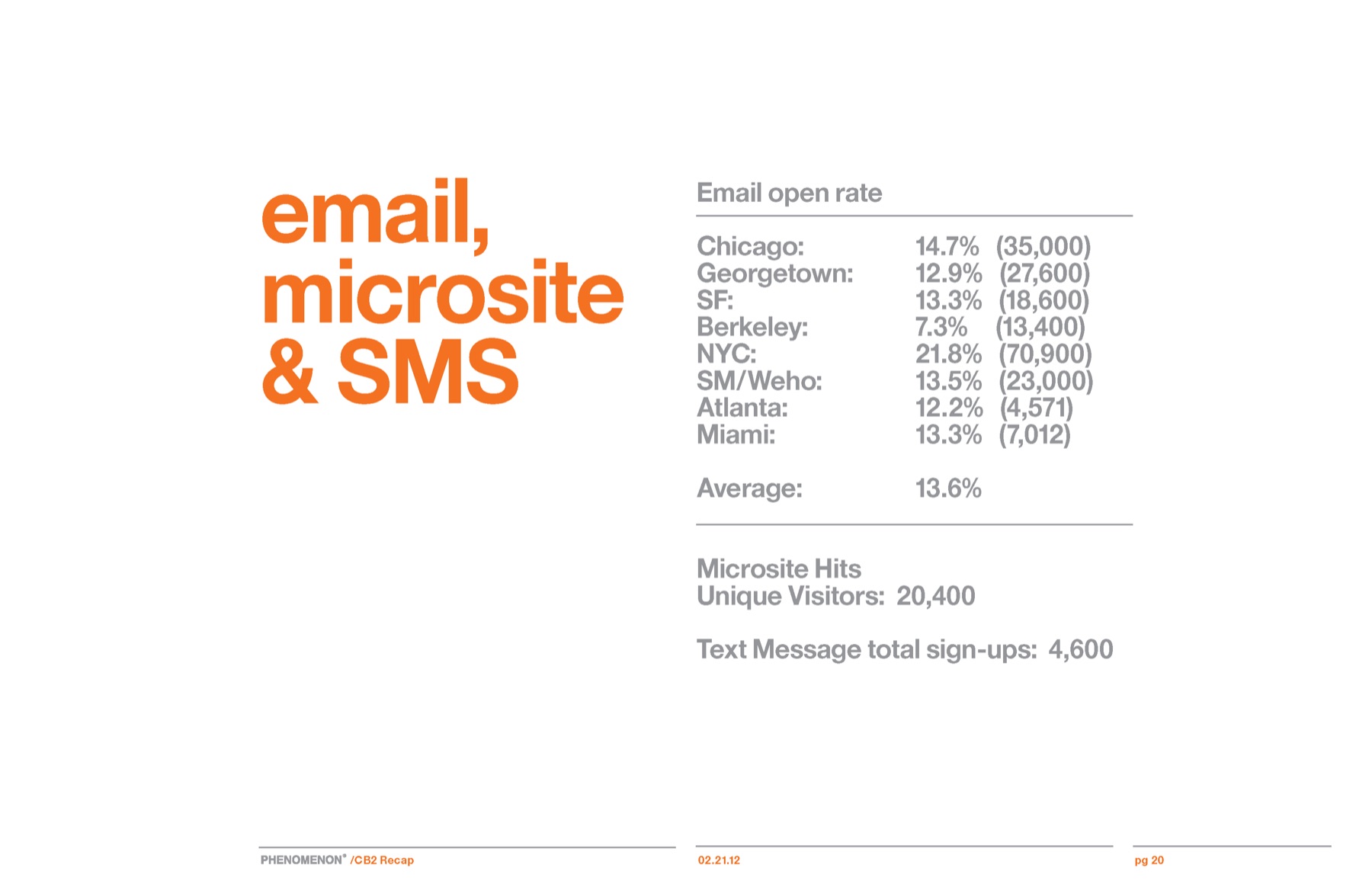
    18. CB2 campaign results slide 18: Email, microsite and SMS results.
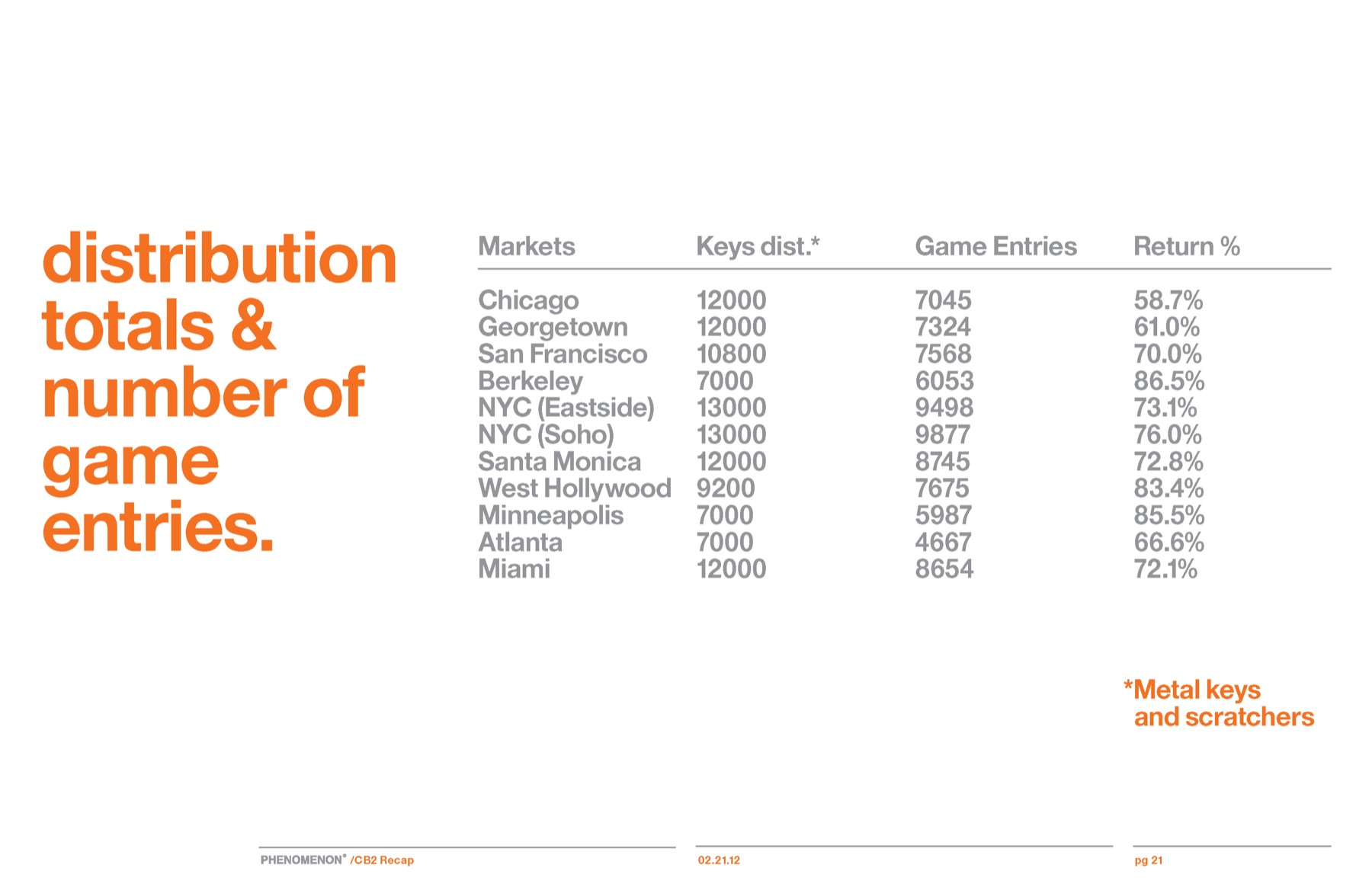
    19. CB2 campaign results slide 19: Distribution totals, the number of keys, and game entries.
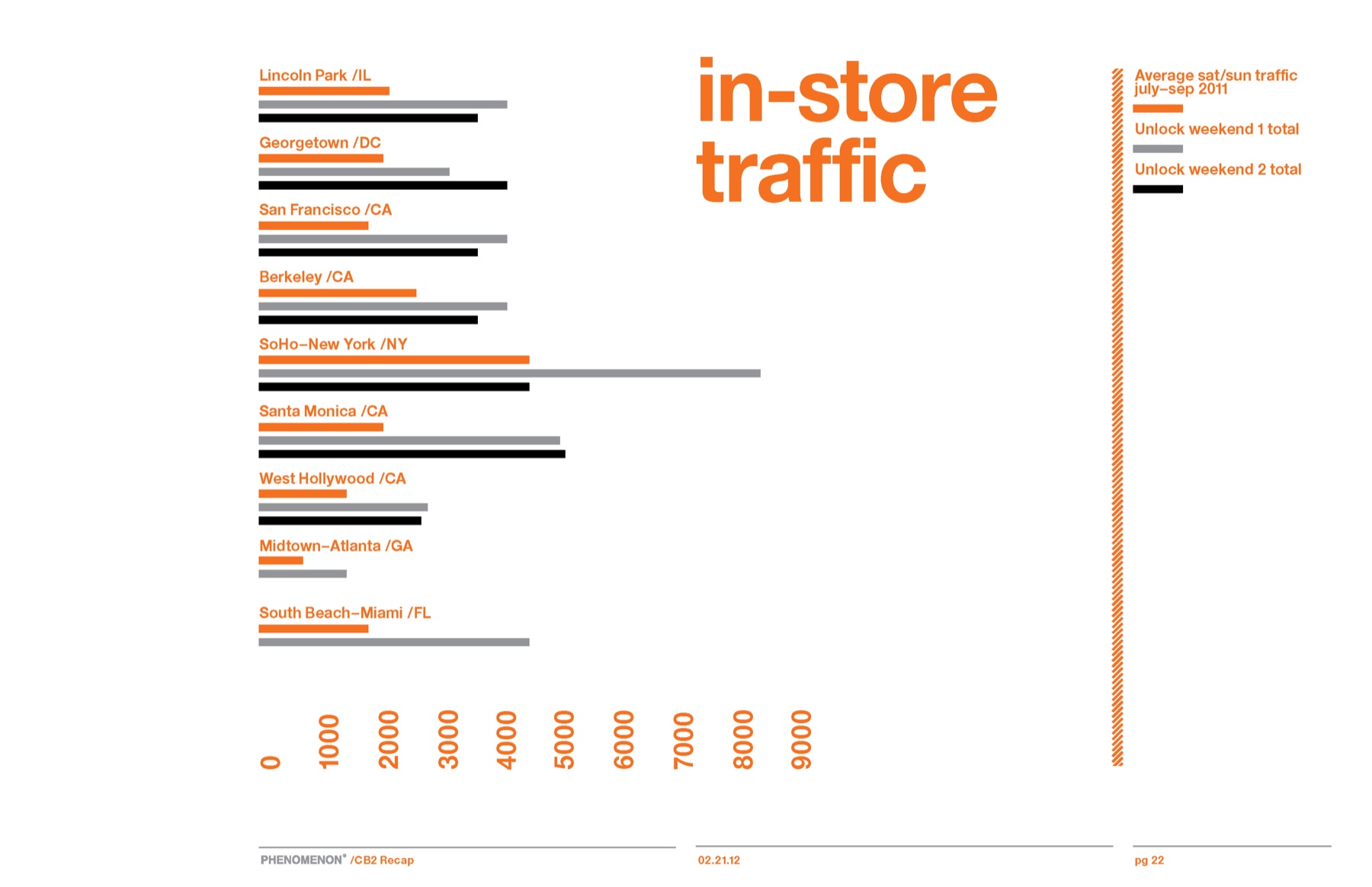
    20. CB2 campaign results slide 20: In-store traffic by market.
    21. CB2 campaign results slide 21: Social media response.

    1 / 21

      What it shows

      • One idea, many places. The door and key worked on the street, online, in email and in store, and tied every channel to one reward.
      • Designing the whole system. Keys, microsite, an iPad and keypad door, and the shop drawings to build it, designed by one UX designer.
      • It moved people. Foot traffic rose 2.5 times at all 11 locations, and every prize was claimed.

      Want the full story?

      See how I take a retail idea from strategy to product.

      The Allē Grow case study follows a vision from research through prototype and launch.

      Read the Allē Grow case study See all work