← More work

Project highlight

Five Hats Ideation Workshop

Two 90-minute remote sessions that loosened up a stiff team and got them ideating again.
  • Ideation
  • Workshops
  • UX Strategy
  • Education
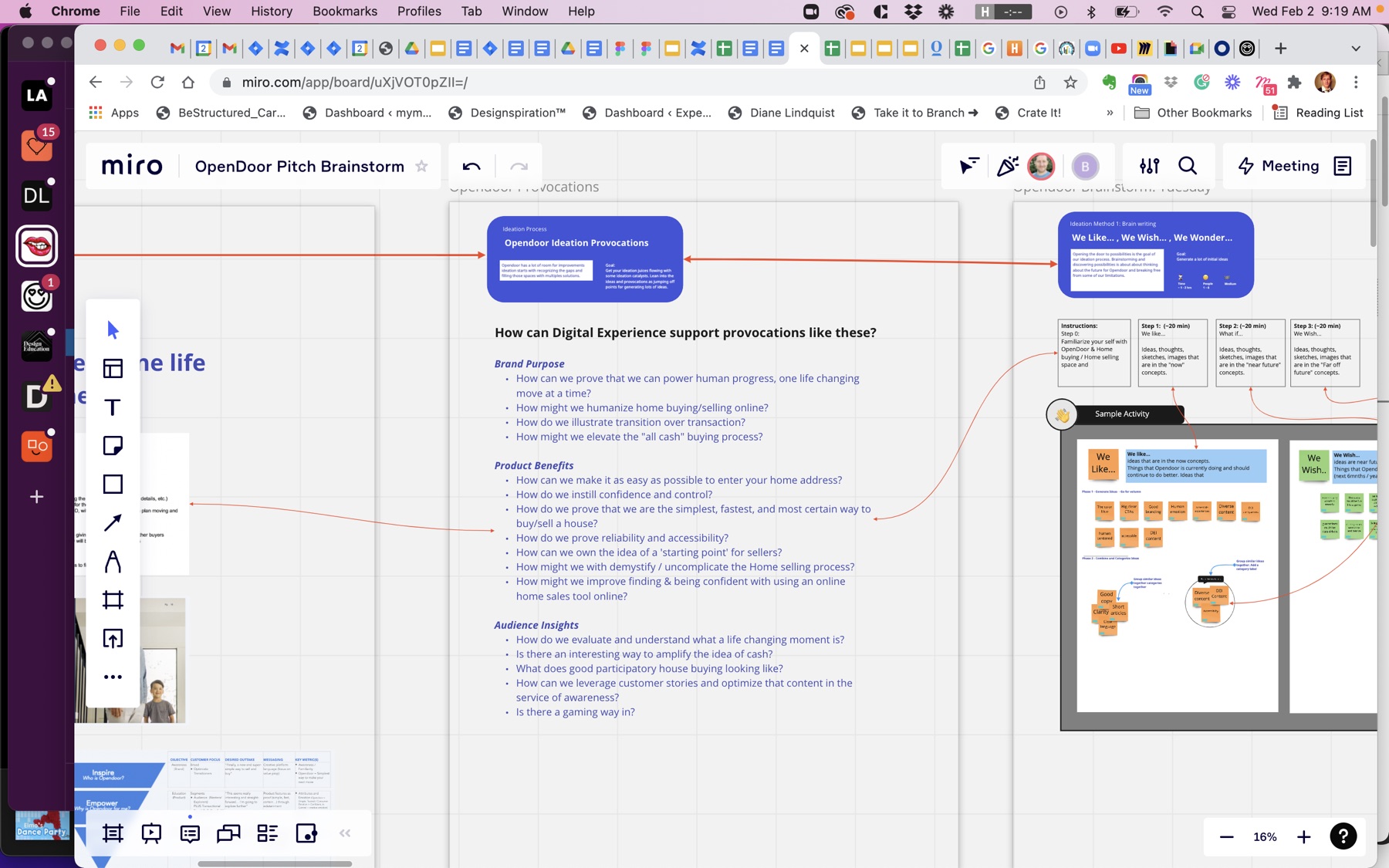
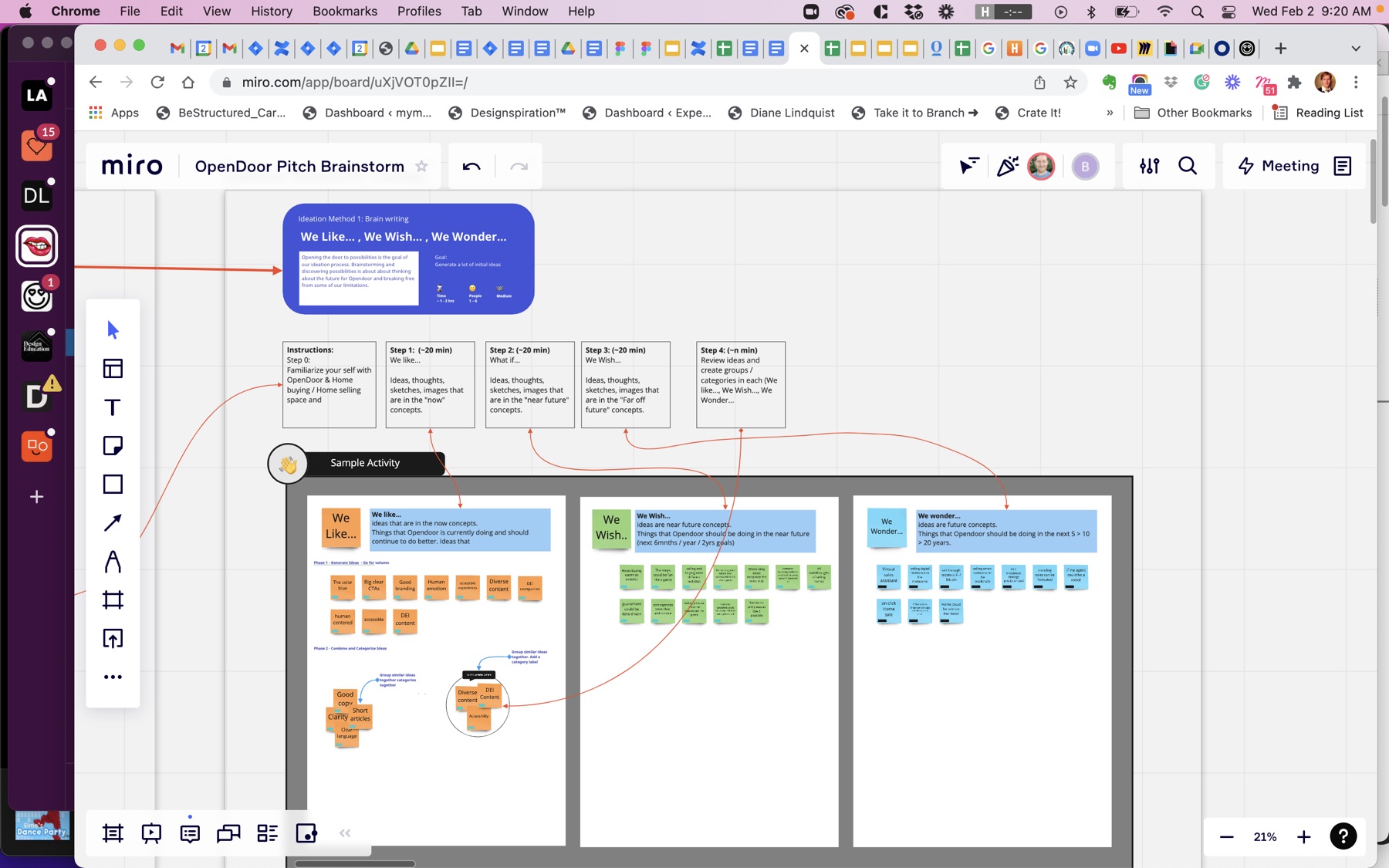
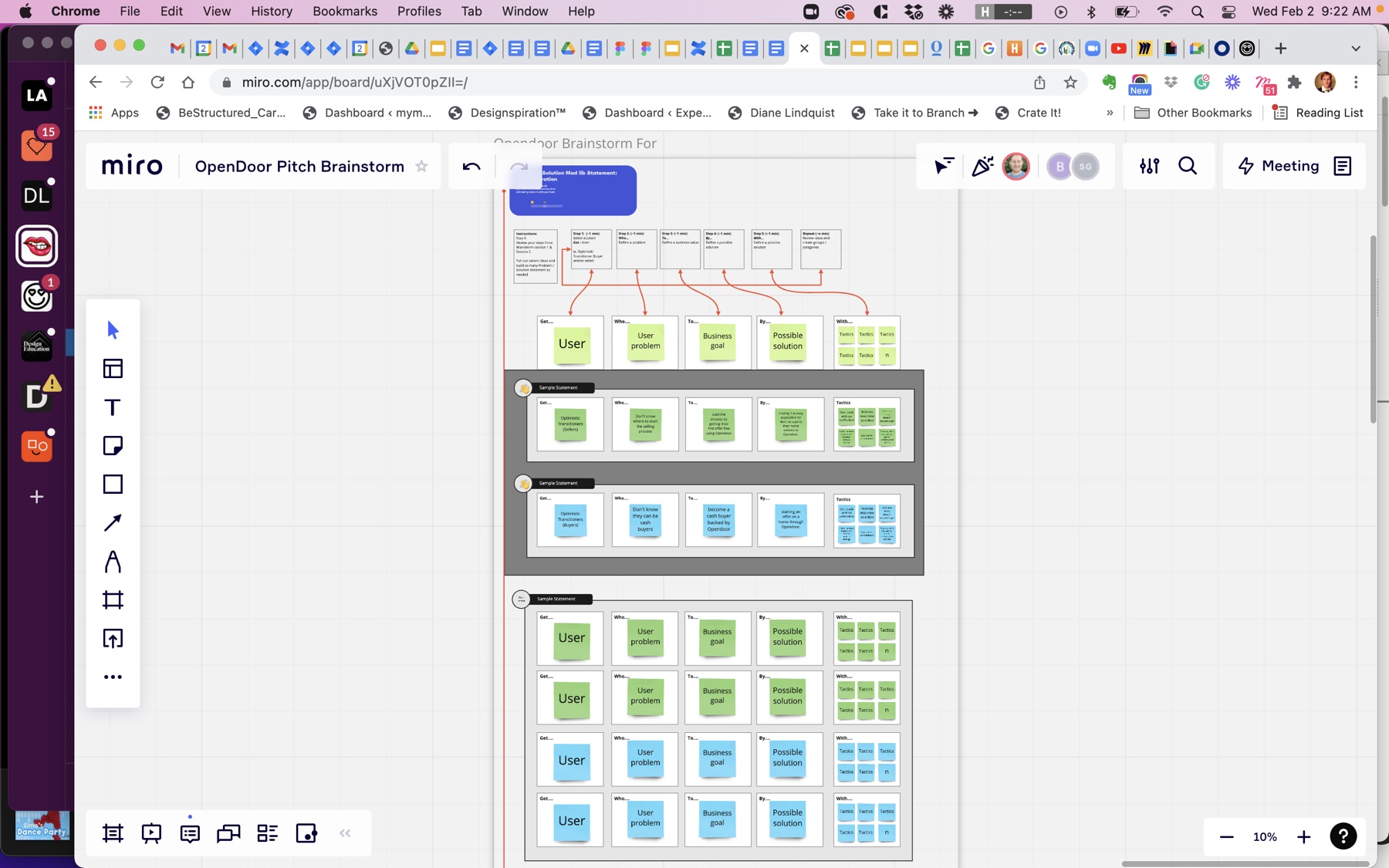
A Miro board laying out the What If ideation session with instructions and sticky note grids
My role
Sr. UX Designer and workshop facilitator
Consultant
Client
Open Door Consulting
for Deutsch Inc.
Format
2 sessions, 90 minutes each
Remote, on a shared Miro board
When
Early 2022
[Confirm month and participant count]

The quick version

The Deutsch Inc. team needed to be mixed up and challenged to ideate with some new strategies. As a consultant for Open Door Consulting, I designed and ran two 90-minute remote ideation sessions: What if / We like / We wish to loosen up a stiff group, then Five Hats to stretch their concepts and get them thinking broadly.

The sessions produced a lively set of ideas from a team that had been struggling to ideate in a meaningful way.

The work
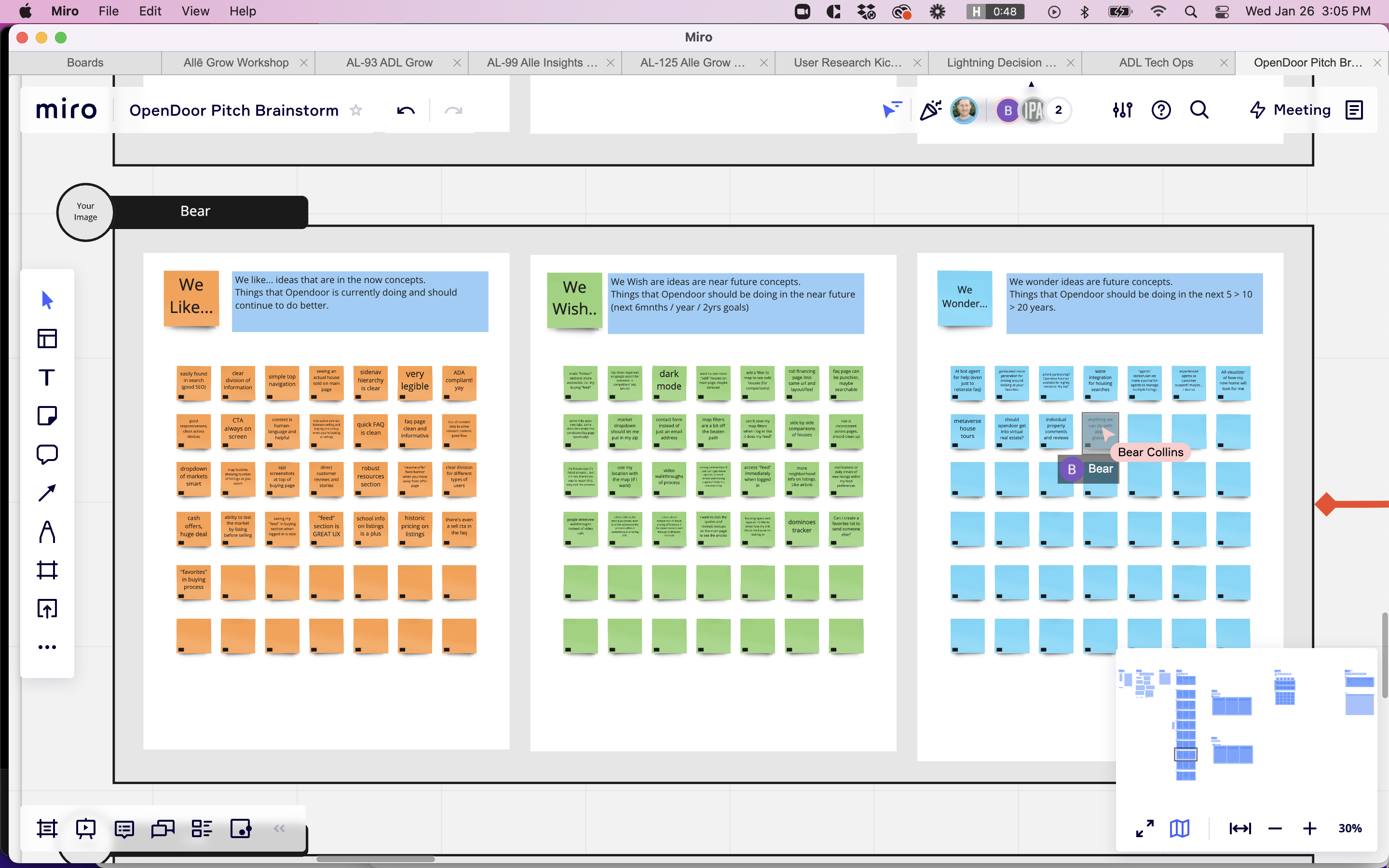
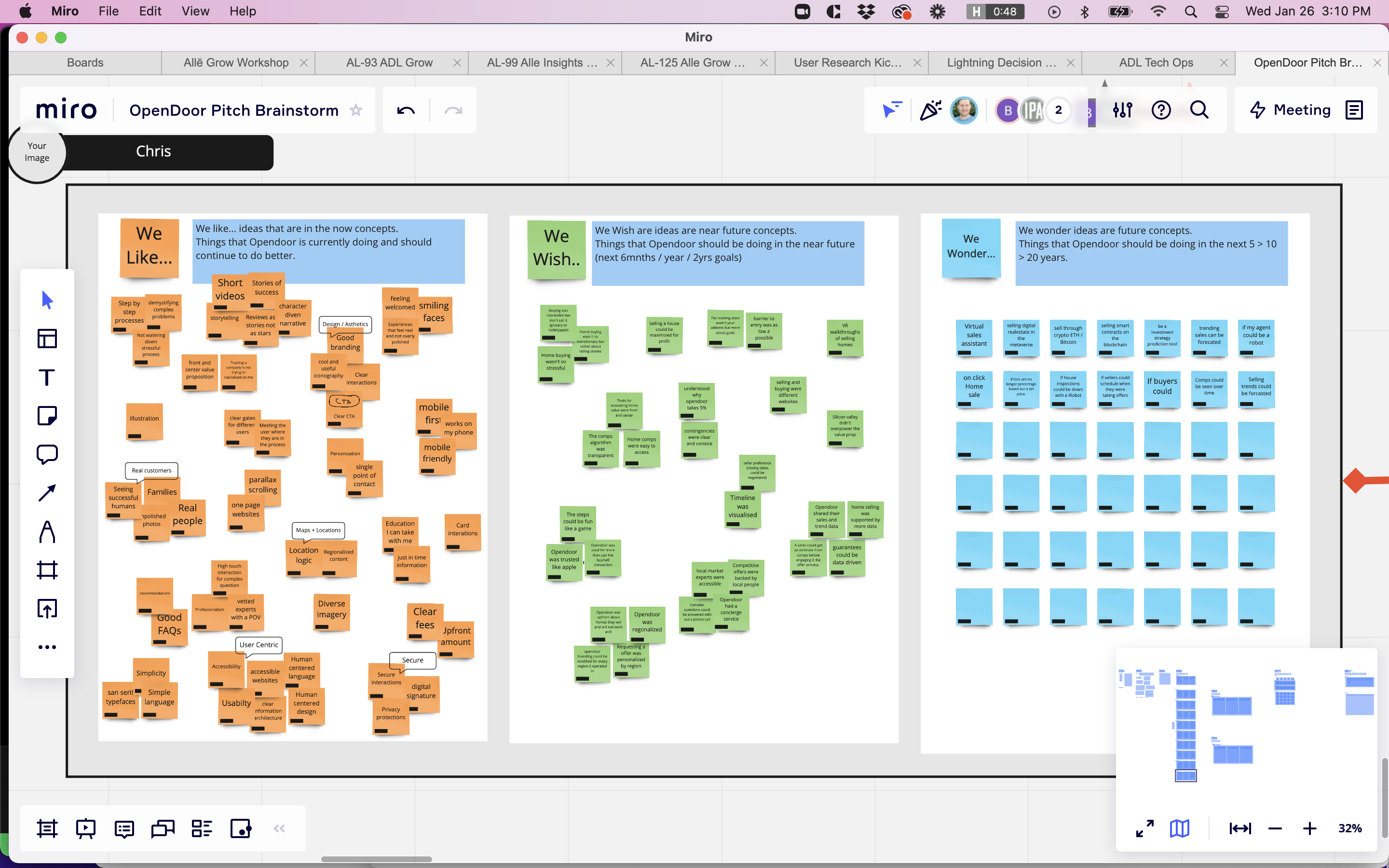
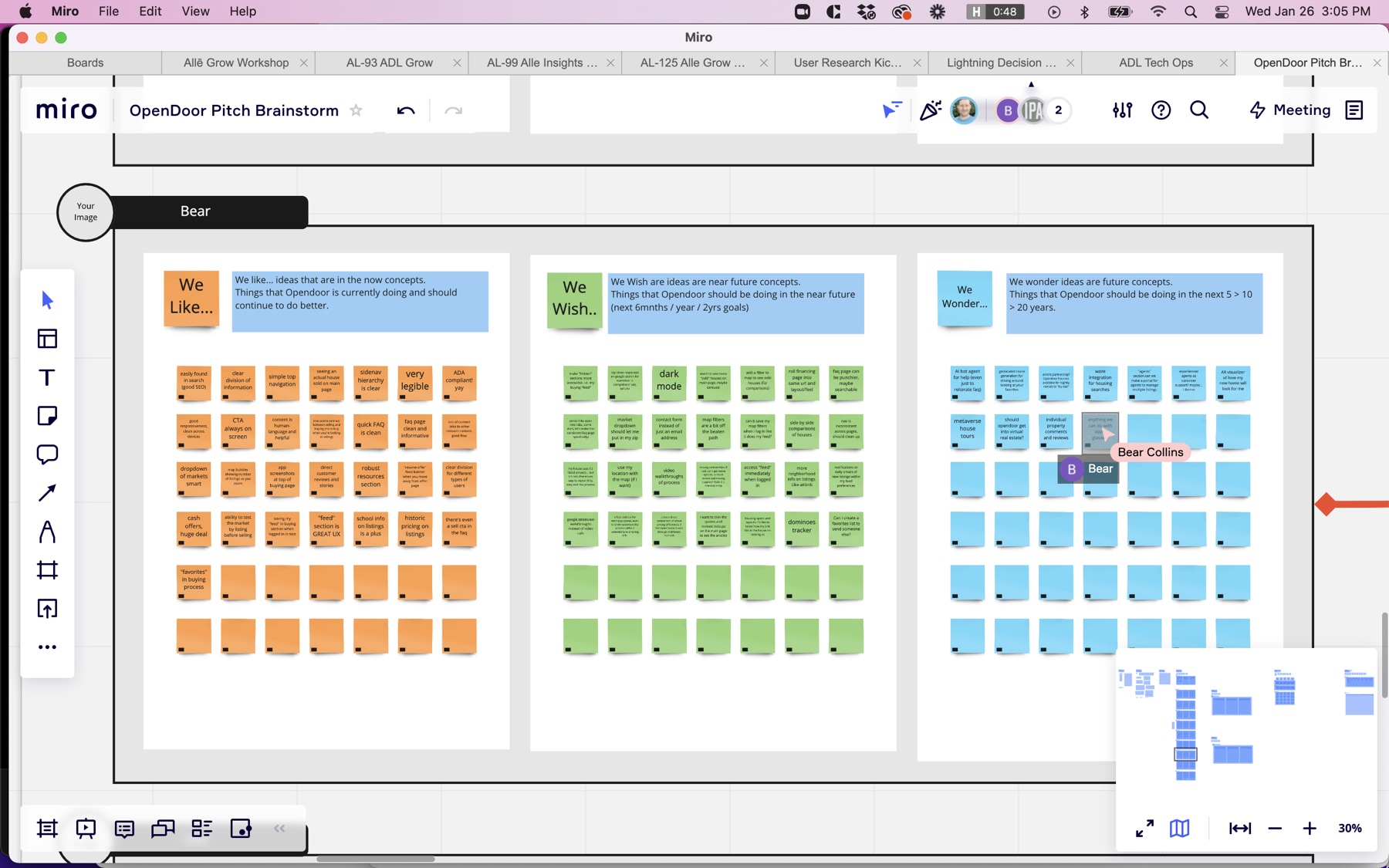
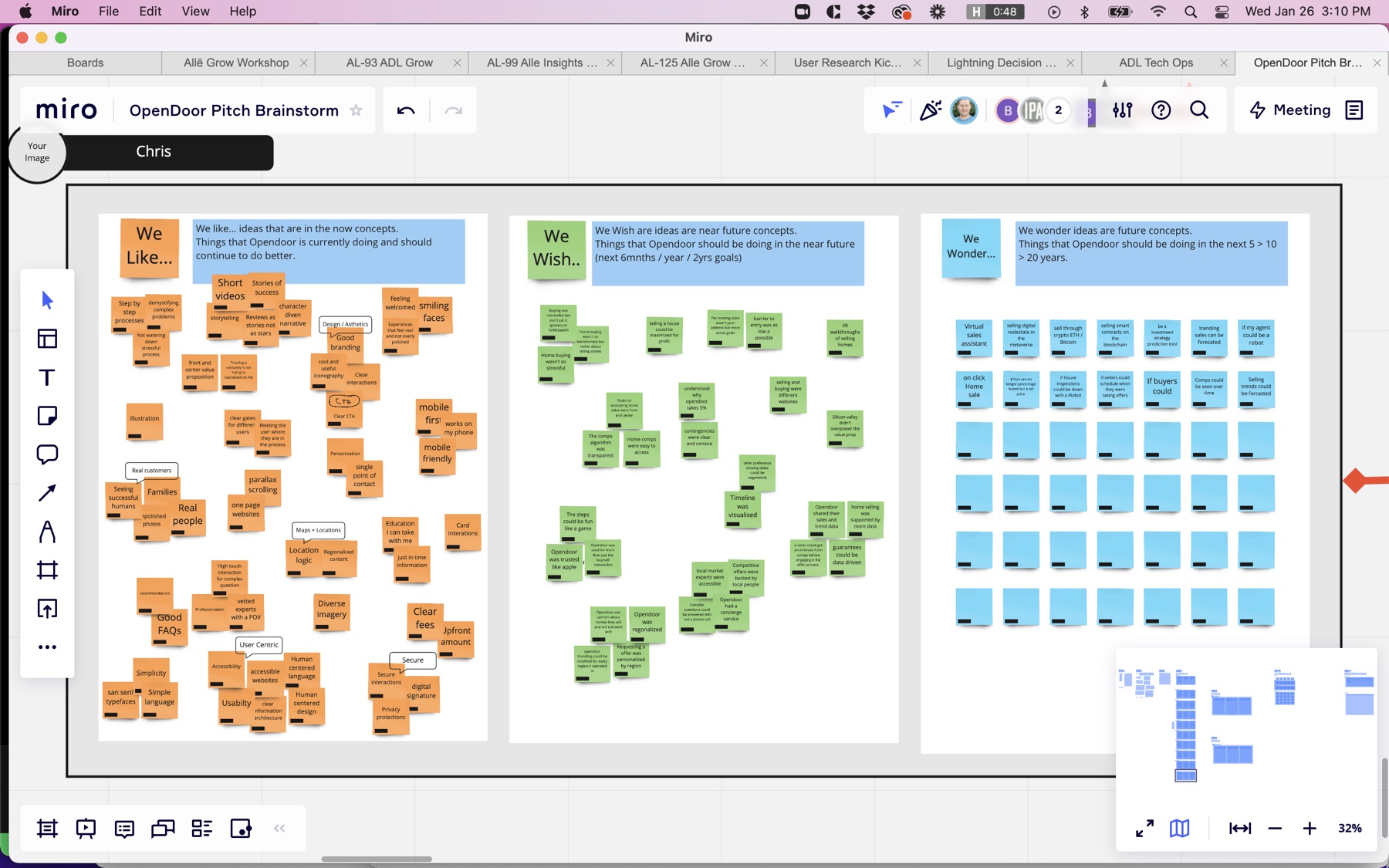
Three columns of color-coded sticky notes for the What If session
Session 1: What if / We like / We wish. What if / We like / We wish is a simple framework for freeing up stiff teams. Three prompts, three colors, and a lot of sticky notes fast.
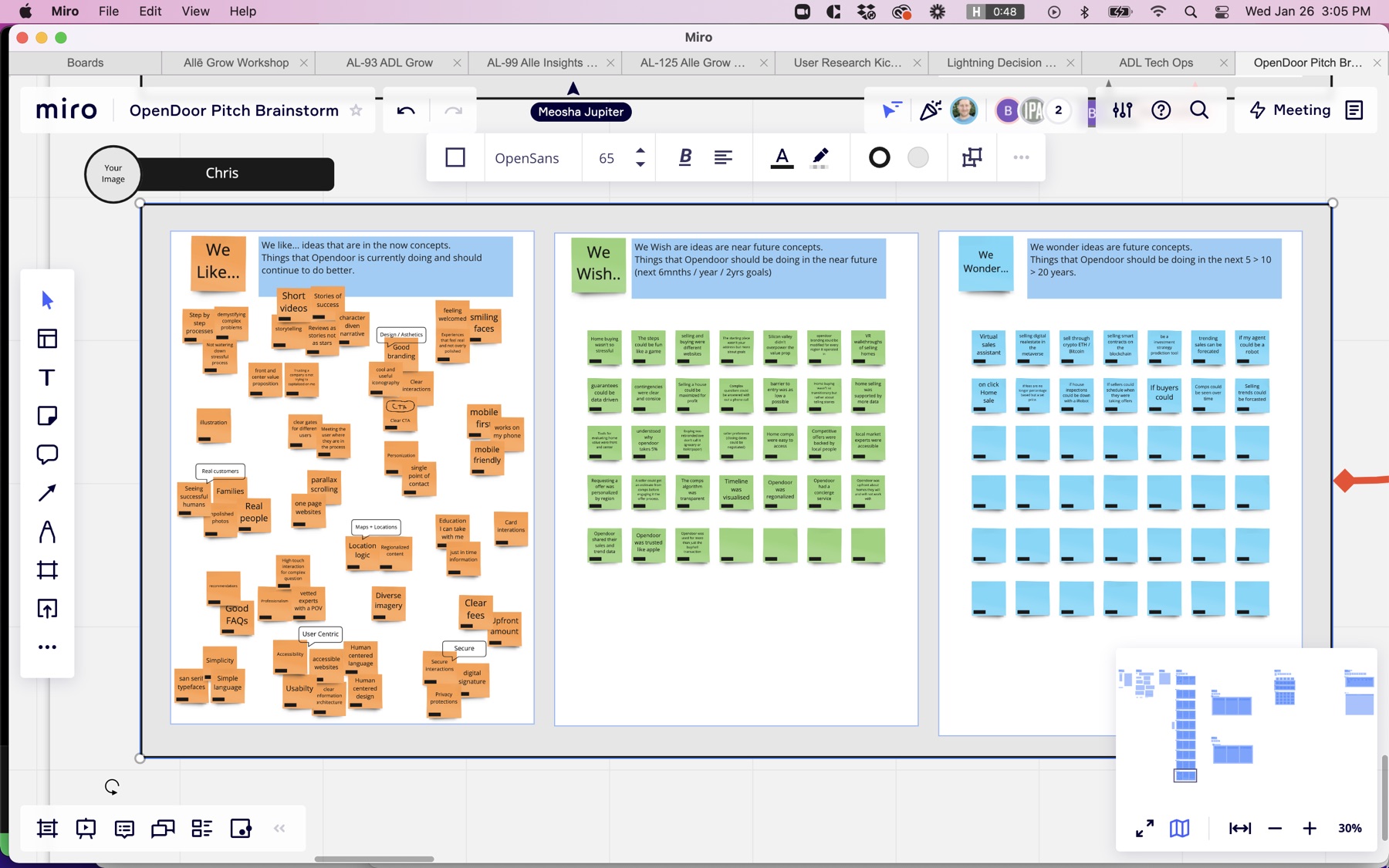
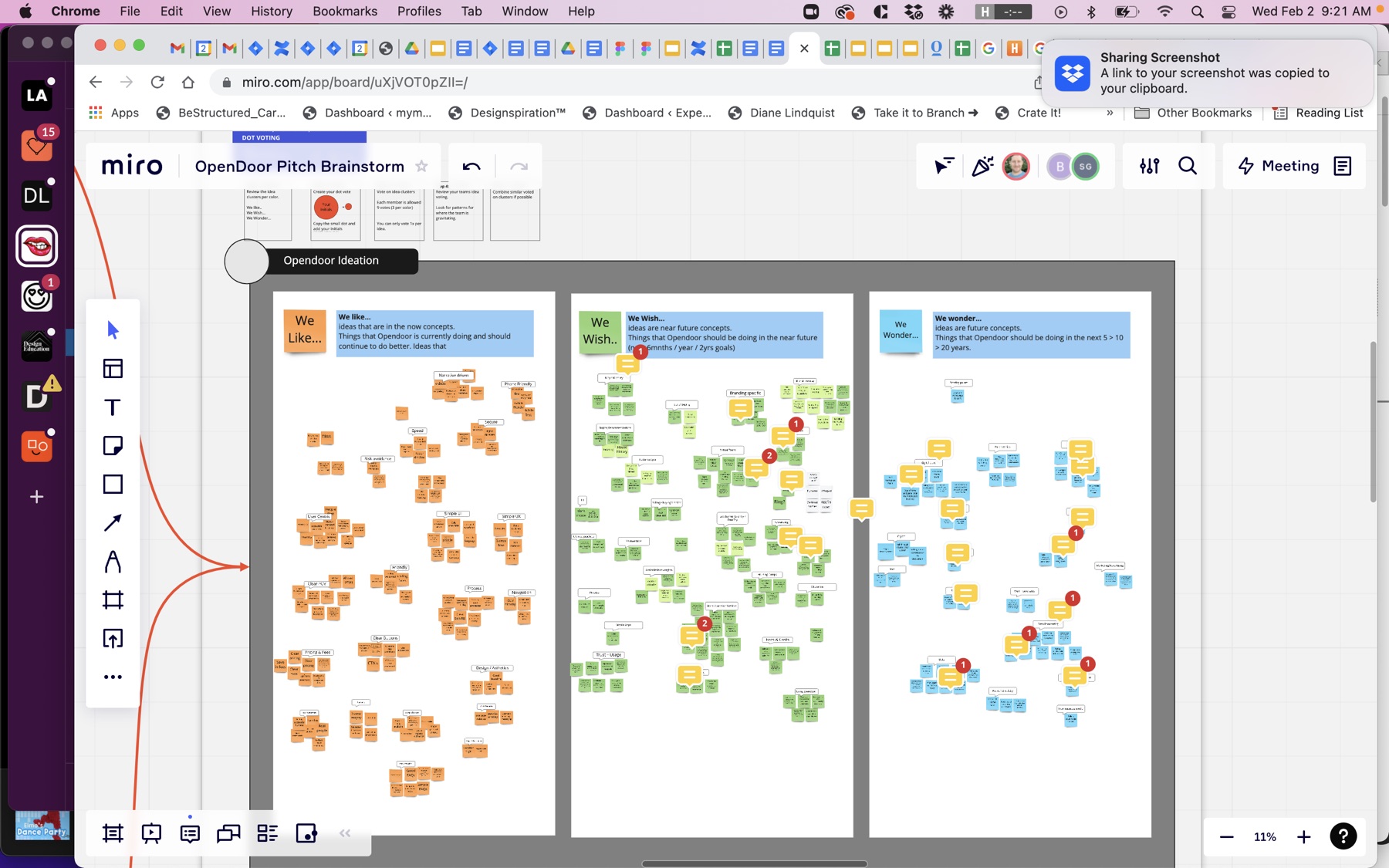
The sticky notes from the What If session regrouped into clusters
Sorting the ideas. The group clustered what they wrote, so patterns could show up on their own.
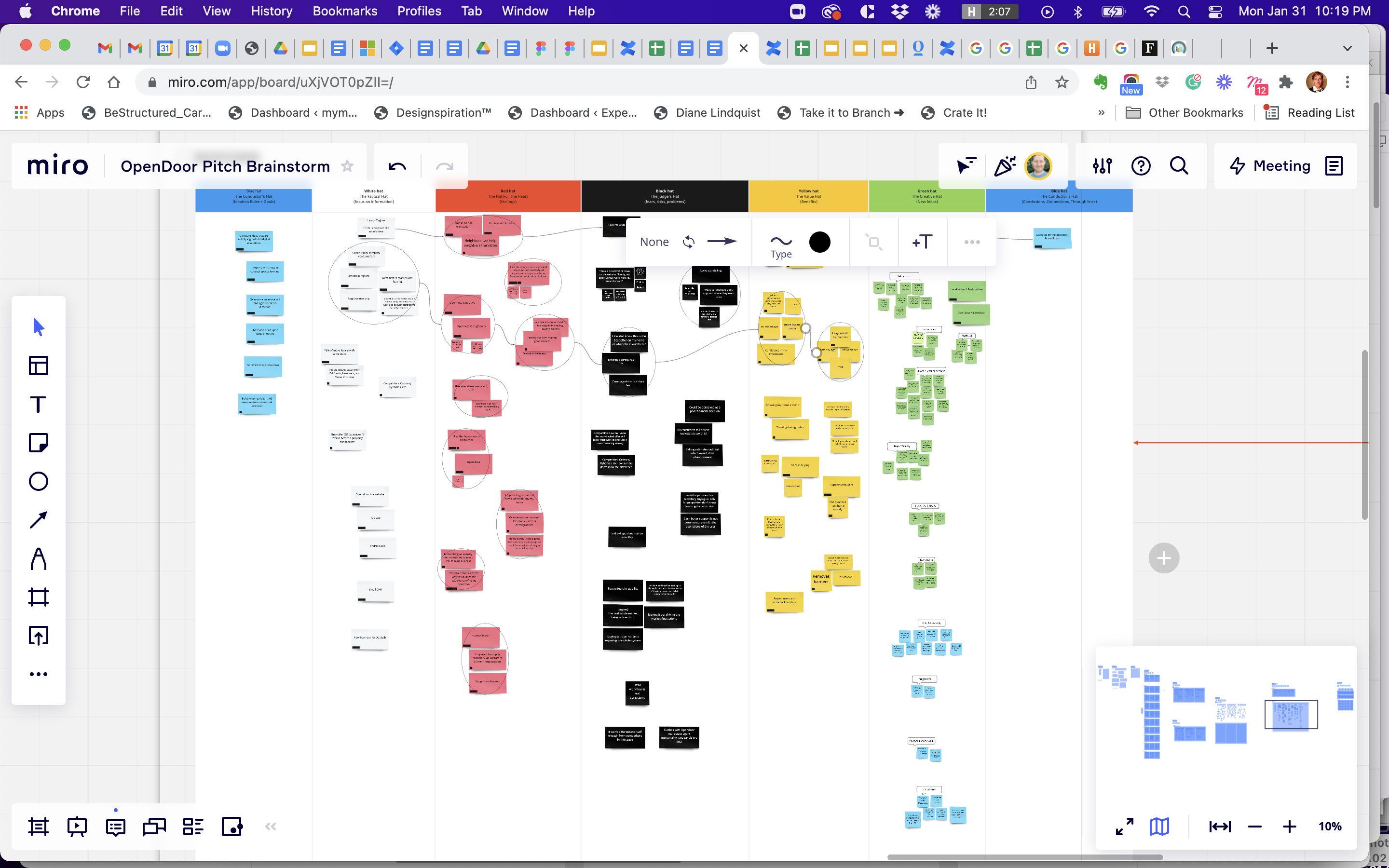
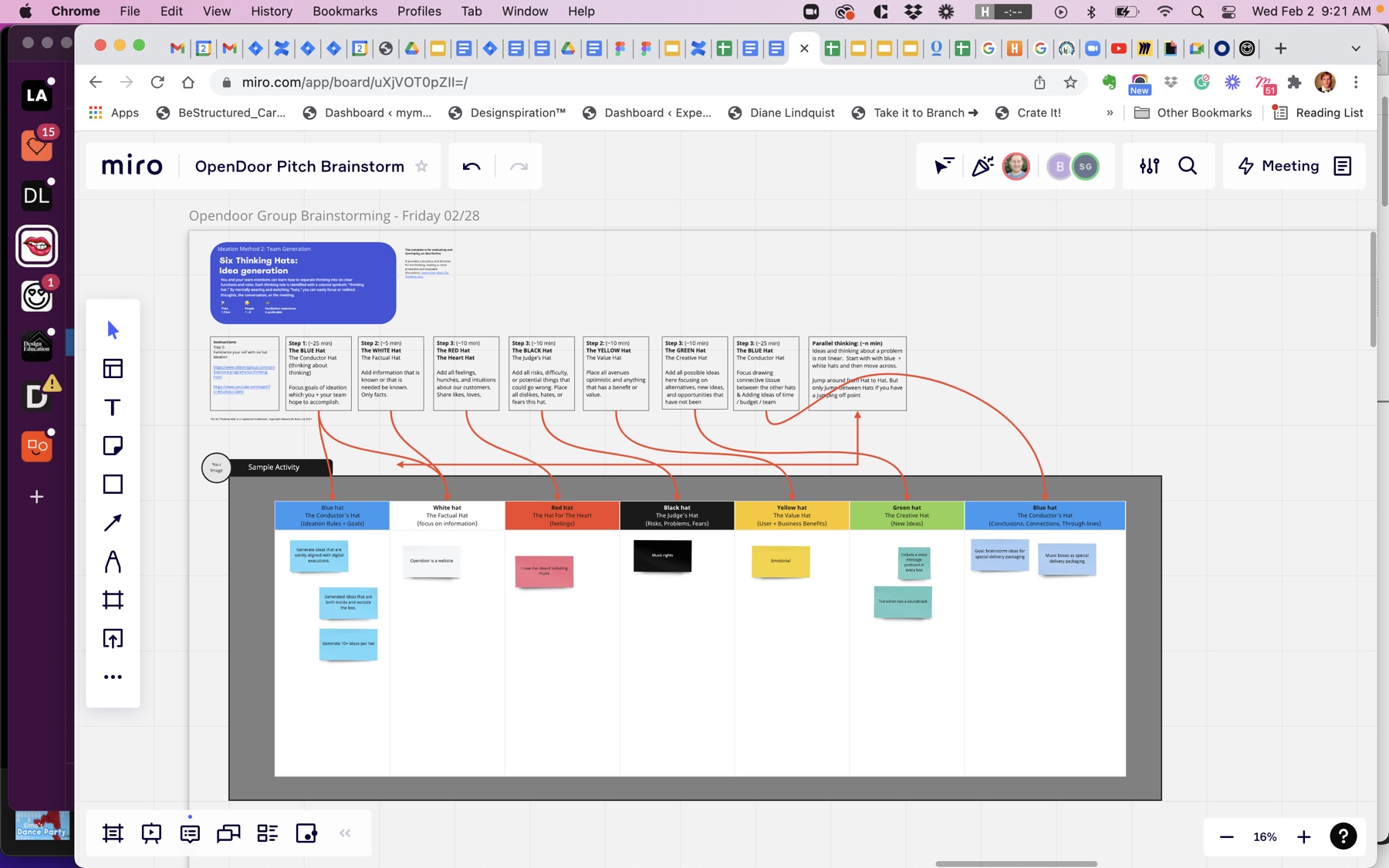
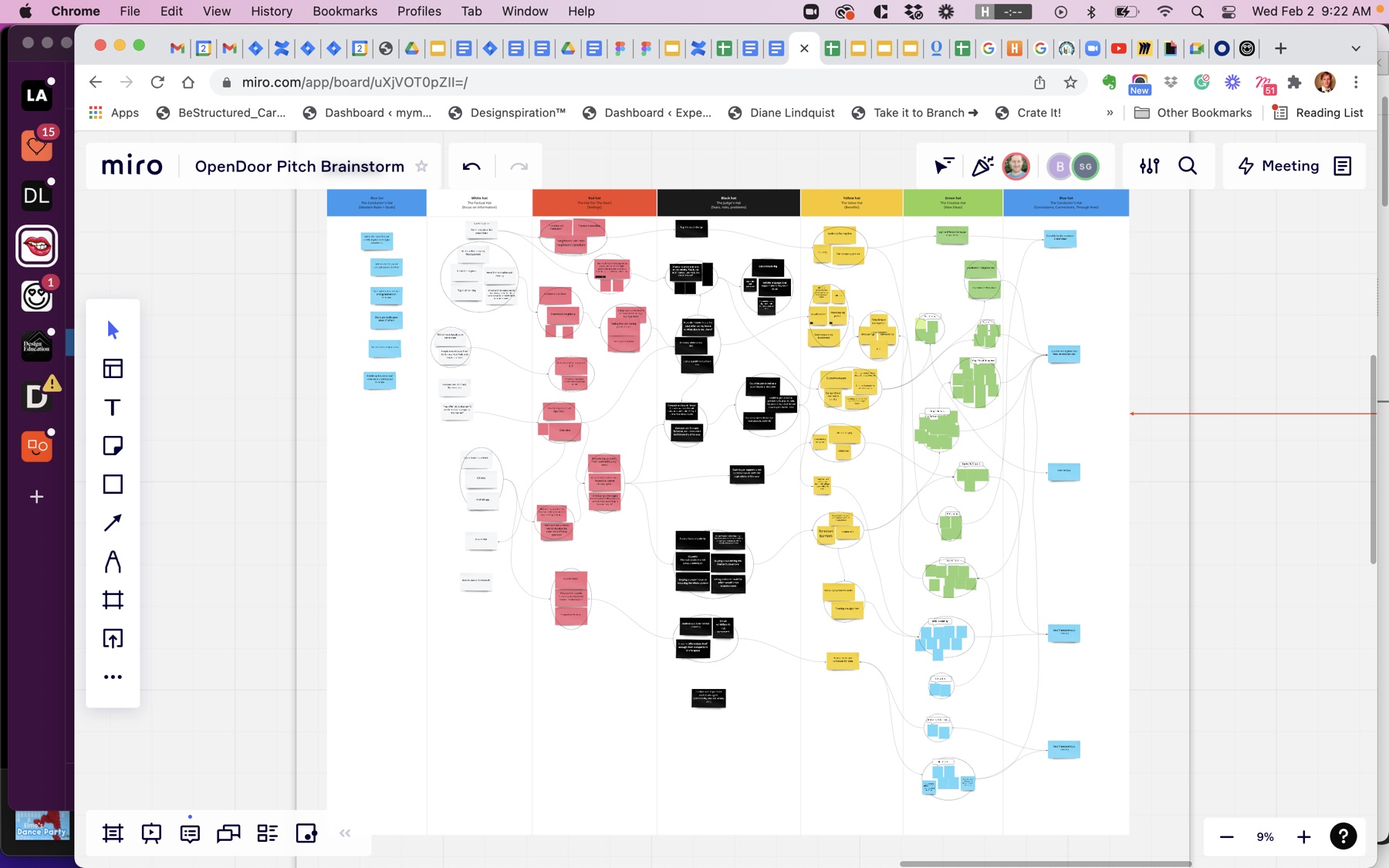
The Five Hats board with sticky notes in black, red, yellow, green, and blue columns
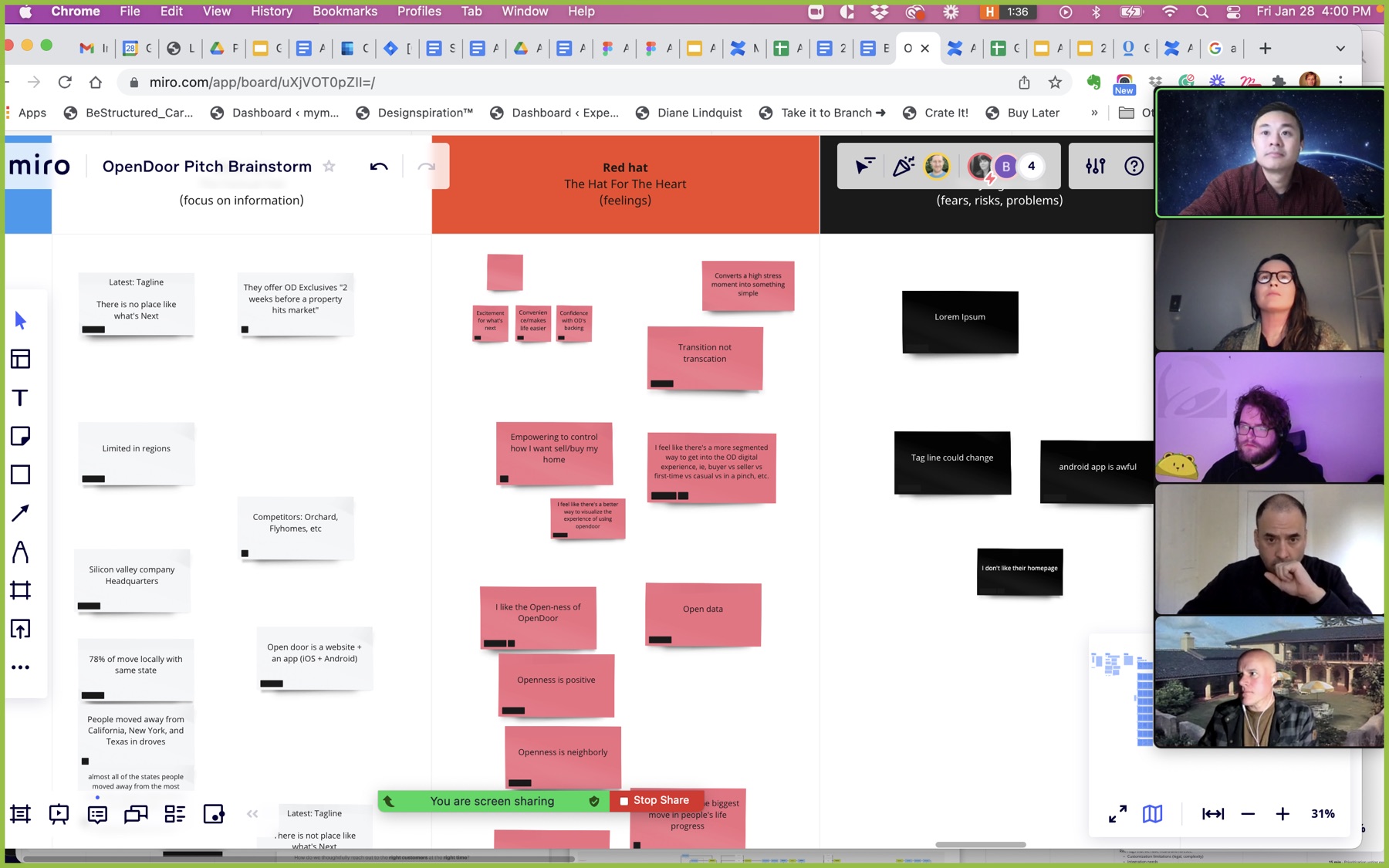
Session 2: Five Hats. Each hat is a different lens, which pushes the team to stretch their concepts and think more broadly.
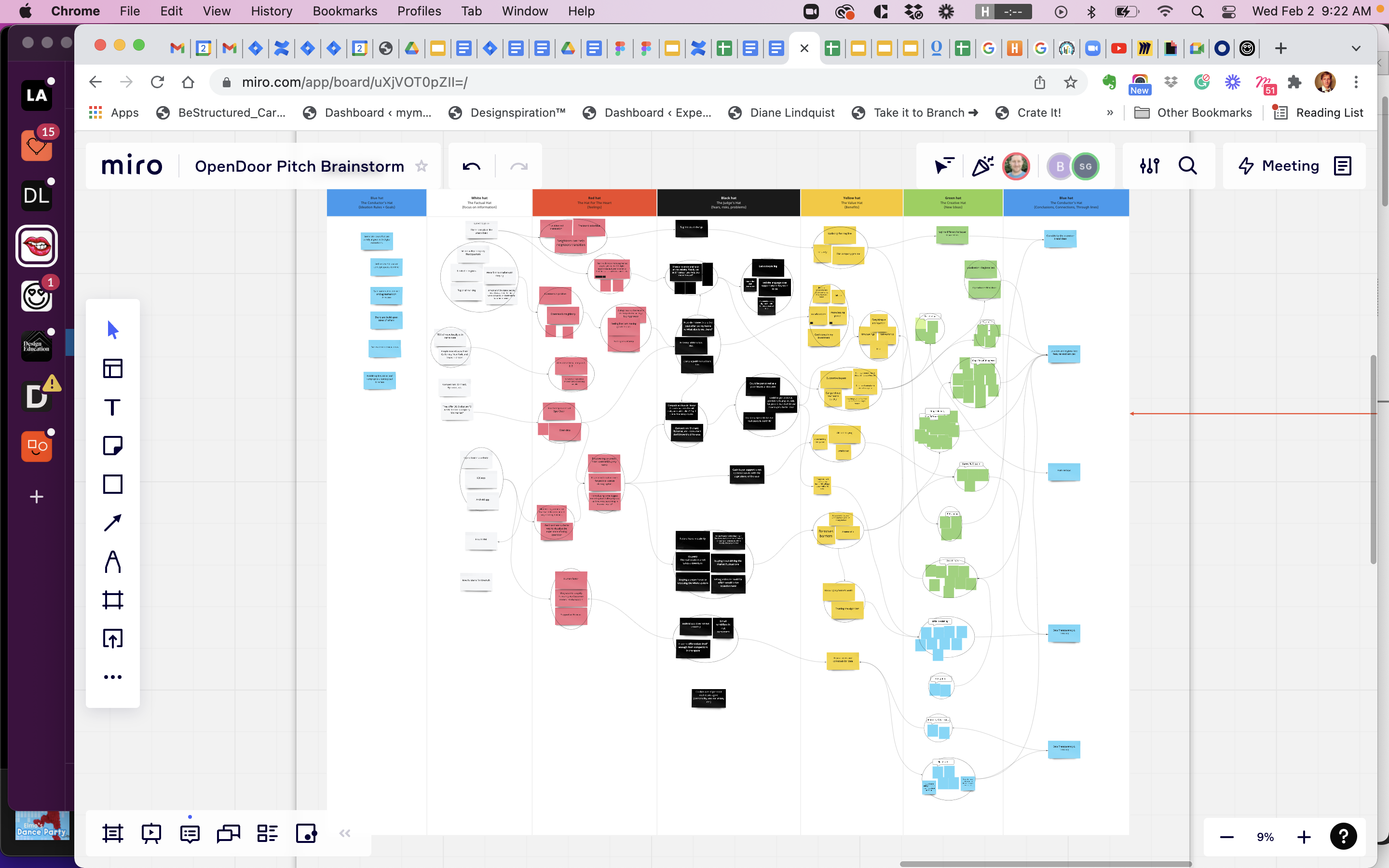
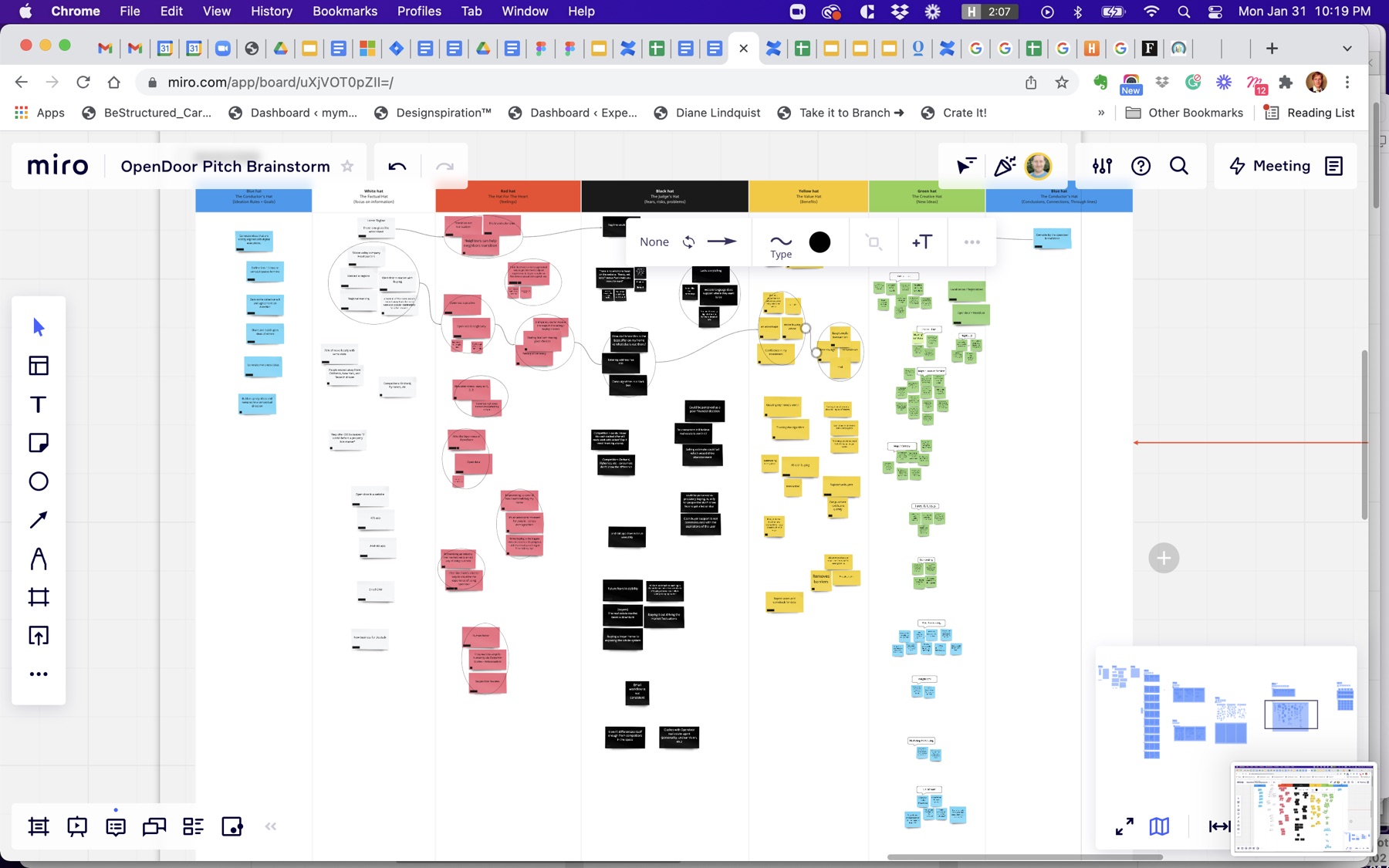
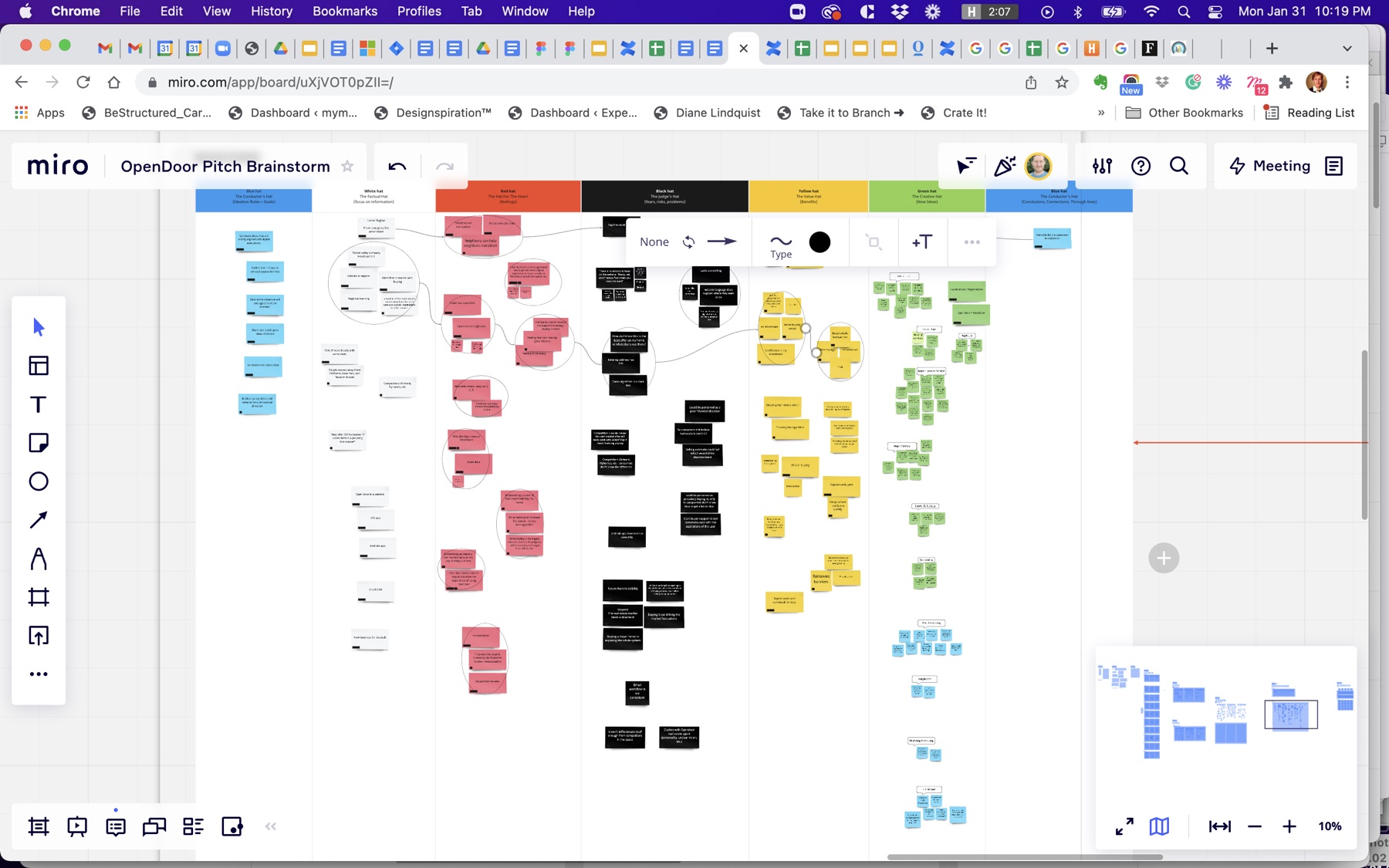
The Five Hats board at the end of the session with colored notes across all columns
The result. A lively board of ideas from a team that started the week struggling to ideate.

All the boards

Flip through all 17 screens from the two sessions, in the order they happened. Use the arrows, your keyboard's left and right keys, or swipe.
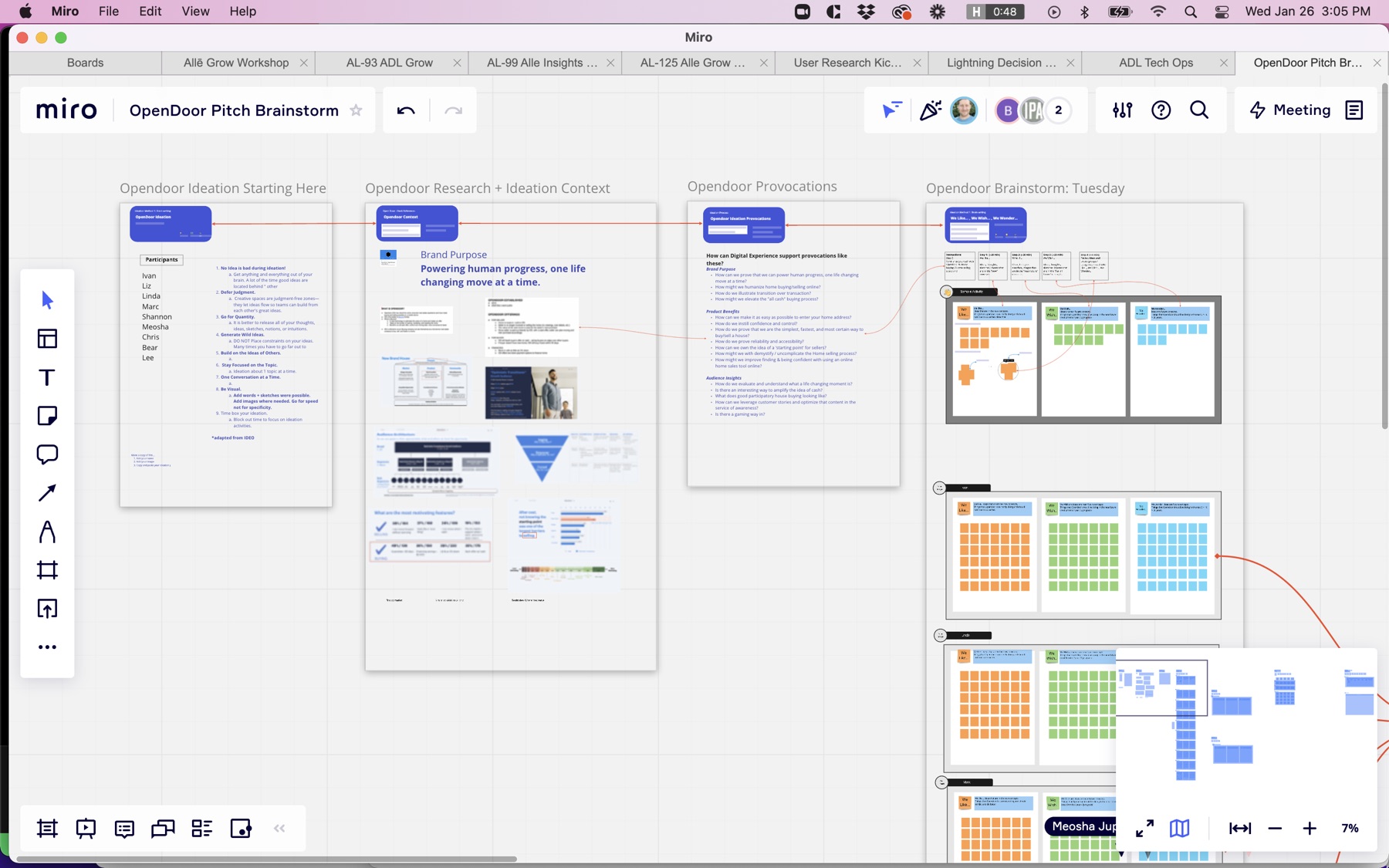
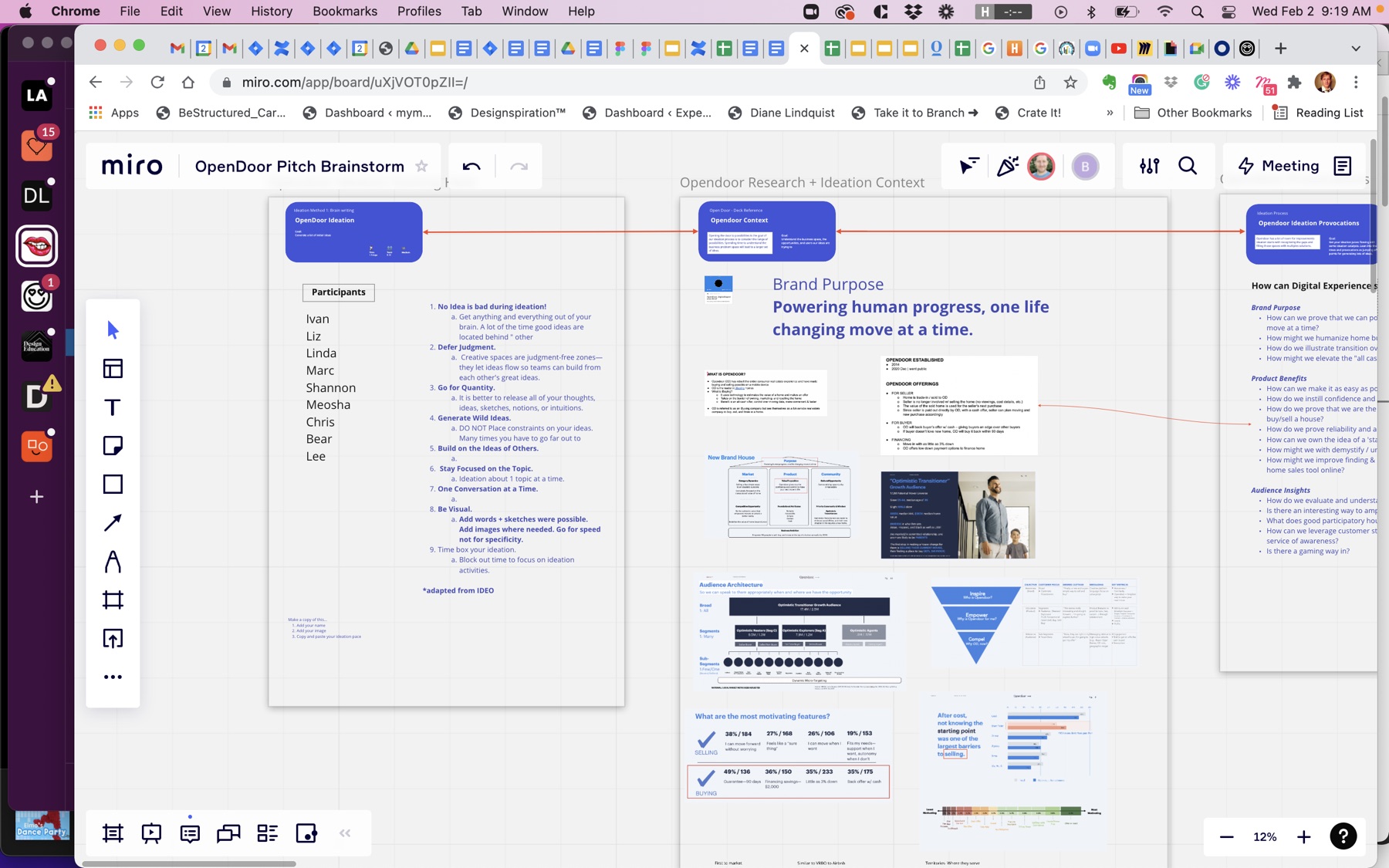
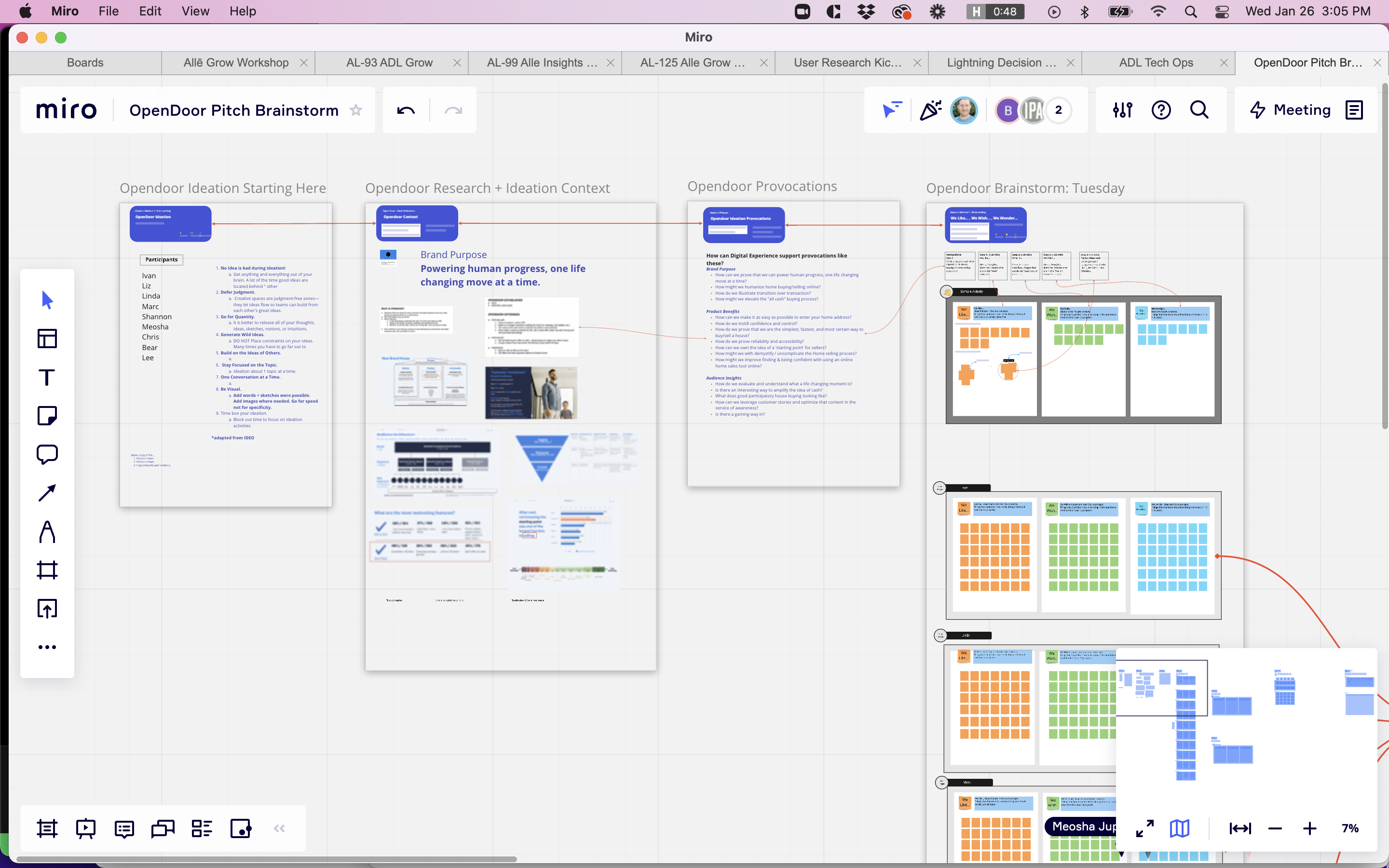
  1. Miro board: The plan on one board: both sessions laid out in Miro, with instructions and sticky-note grids.
  2. Miro board: Setting up: the session team, the purpose and the context the group worked from.
  3. Miro board: Provocations: "How can digital experience support..." questions that framed the ideas.
  4. Miro board: Instructions for What if / We like / We wish, with a sample activity to show the format.
  5. Miro board: Session 1 grid: three columns for We like, We wish and We wonder.
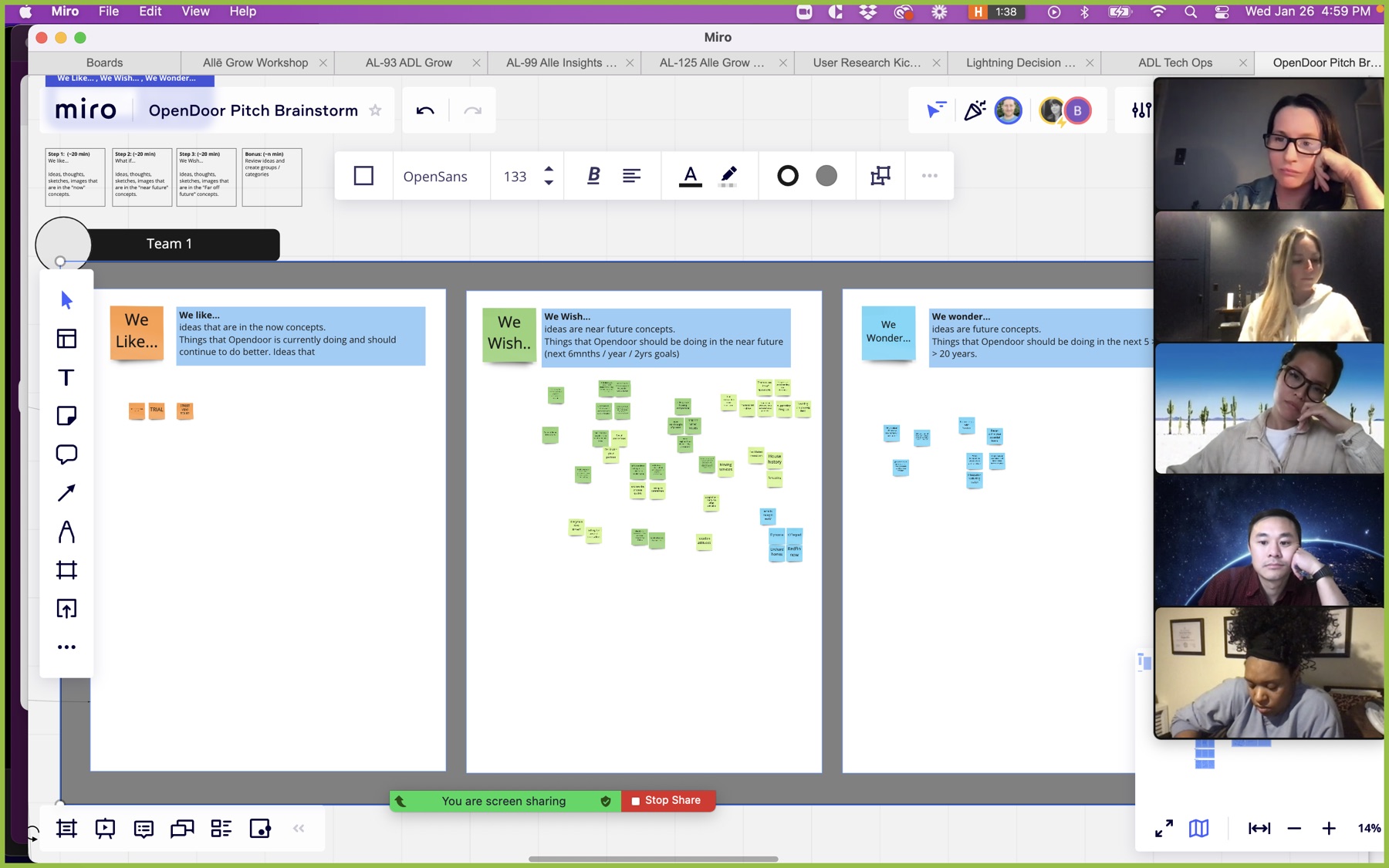
  6. Miro board: Session 1 live: a team filling in the grid while on a video call.
  7. Miro board: Notes pile up: orange, green and blue sticky notes across the three prompts.
  8. Miro board: Sorting: the notes regrouped into clusters.
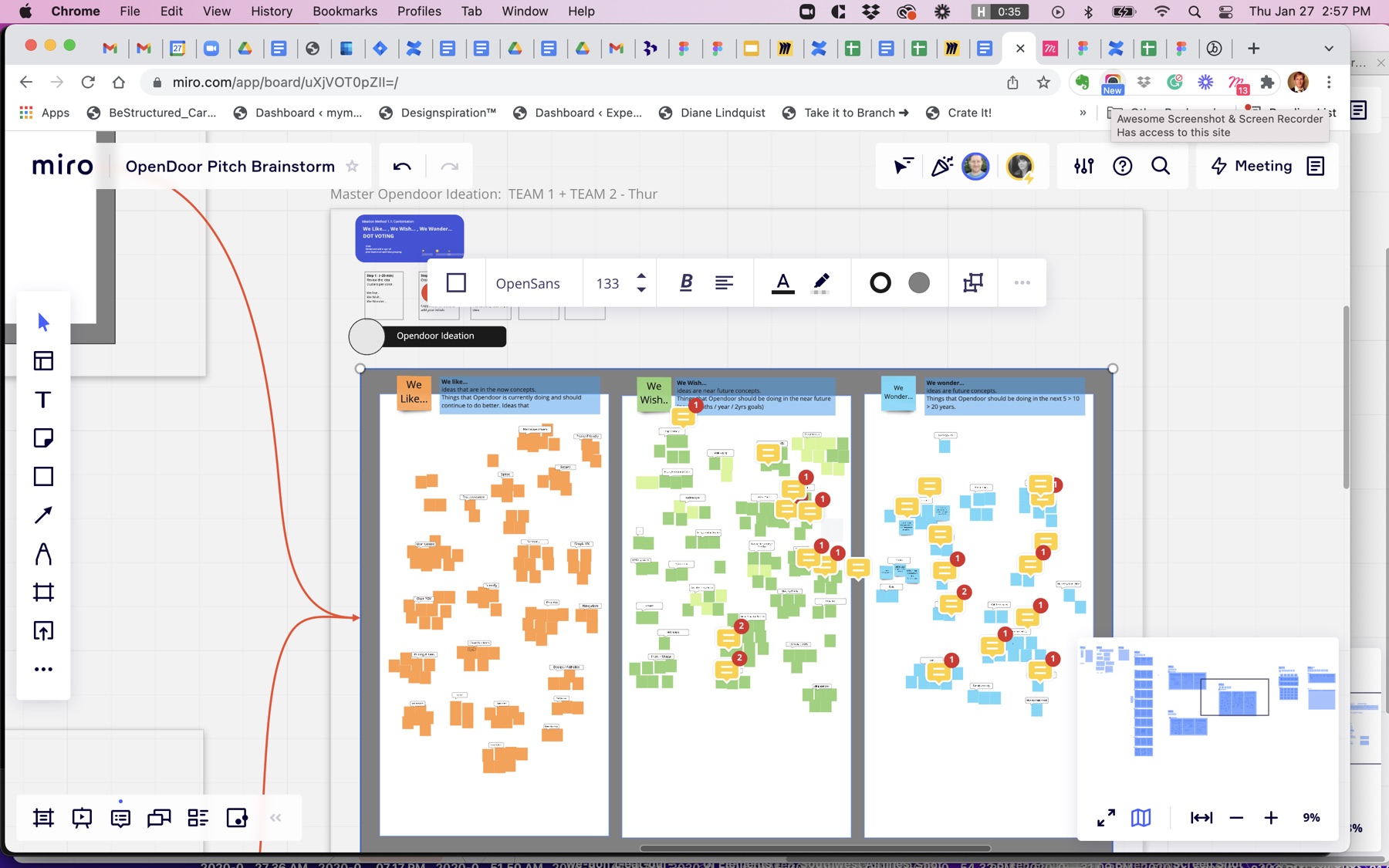
  9. Miro board: Dot voting: the group marks the ideas that matter most.
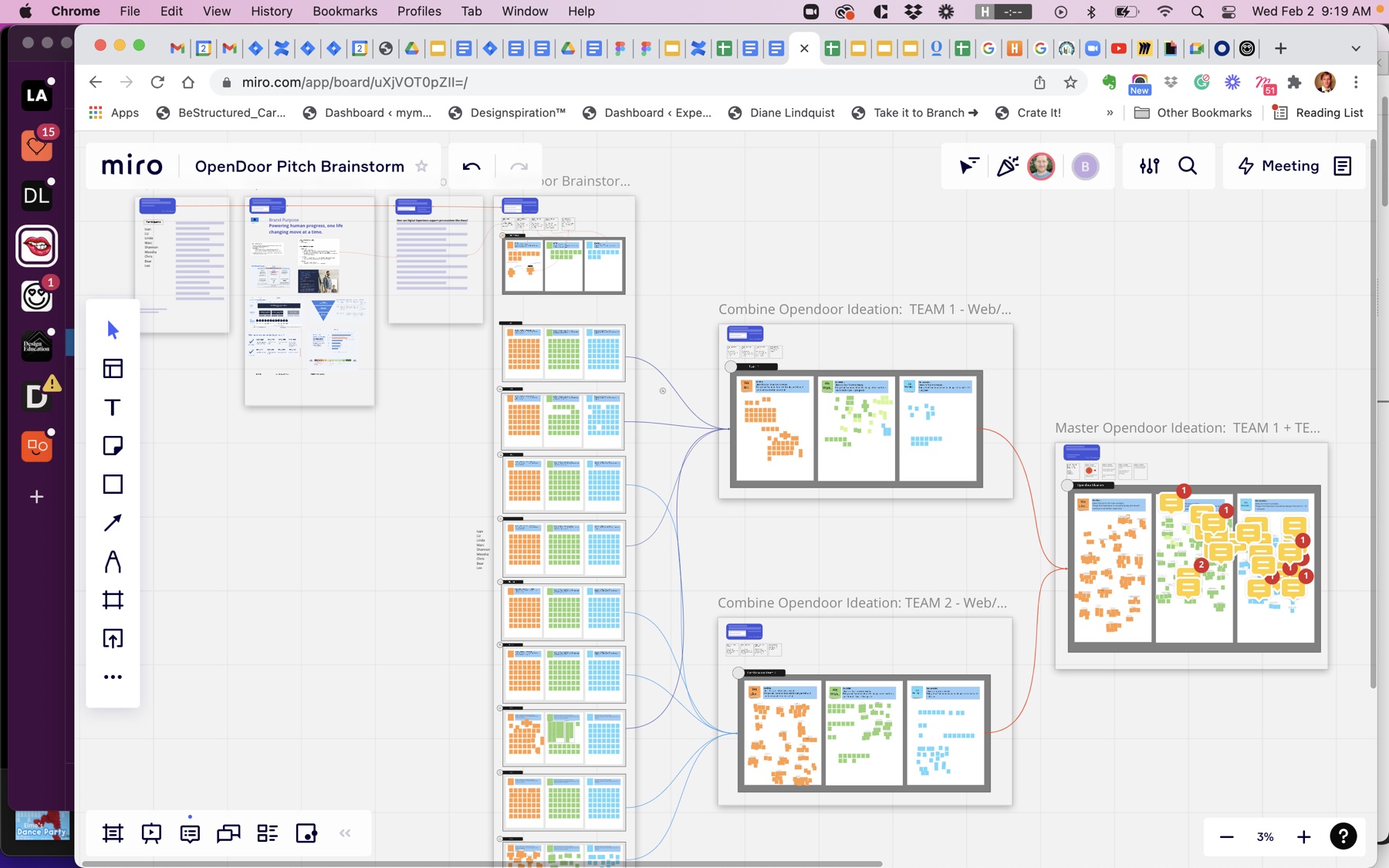
  10. Miro board: Combining: results from two teams brought together onto one master board.
  11. Miro board: Votes: the What if board with voting markers added.
  12. Miro board: Session 2 setup: the Five Hats board with instructions and a sample activity.
  13. Miro board: Five Hats in progress: notes and comments across the colored hat columns.
  14. Miro board: Five Hats live: the team working through the red hat, feelings and gut reactions.
  15. Miro board: Five Hats board: each hat gives a different lens on the same ideas.
  16. Miro board: The result: a full board of ideas viewed from every hat.
  17. Miro board: A problem-framing board used to map user needs and feedback.

1 / 17

    What it shows

    • Facilitation. Keeping a stiff, remote group moving and comfortable sharing in 90 minutes.
    • Method design. A warm-up framework to free the team up, then Five Hats to broaden their thinking.
    • Synthesis. Sorting a wall of sticky notes into clusters the team could see and build on.

    Want the full story?

    See how I teach people to think like this.

    The UX/UI bootcamp case study shows how I turned facilitation, critique, and design thinking into a 24-week curriculum taught at 25 institutions.

    Read the UX/UI bootcamp case study See all work